

AARE blog

Teachers say it’s crazy now. That’s not even the whole story

The crisis facing teachers and the teaching profession over the last decade at an international level is well-established in both the academic literature and industry reports.

Borne by compliance-driven and bureaucratic policies that have heightened accountability and scrutiny over teachers’ work, a large body of evidence has documented the negative impacts felt by teachers resulting from these policies. This includes excessive workloads and intensification of work, elevated stress and burnout, and diminished health and wellbeing. Flatlining salaries and poor professional respect have also culminated to create a disincentive to enter into the profession. 

These pressures have contributed to a growing teacher shortage internationally. The situation is so dire the United Nations (UN) has recently recommended an urgent call to action to transform education systems and the teaching profession globally.    

The UN described the COVID-19 pandemic as having “turned the world of work upside down”. On top of the pressures experienced pre-pandemic, it is crucial to understand how the work of teachers changed post-pandemic. In a recently published article, we explored the legacy impact of the pandemic on school teachers’ work.  

COVID-19: Disrupting a profession in crisis

Teachers’ work changed fundamentally due to COVID. In a matter of weeks following the World Health Organization declaring a worldwide pandemic in early 2020, governments began directing schools to shut down and shift to remote teaching and learning of students.

This experience of remote learning for teachers was fairly short-lived, particularly compared to other sectors where working-from-home has increased and sustained beyond pre-pandemic levels. But empirical studies in Australia and internationally documented the significant disruption faced by teachers from this dramatic shift to their normal ways of working. Teachers’ stress and anxiety increased substantially during the pandemic, workloads grew, and resilience was challenged. 

To ensure continuity of learning, teachers had to very quickly upskill in new technological platforms and systems, working around-the-clock to support their students, despite reports of many teachers feeling very unprepared and overwhelmed. EdTech companies seized the pandemic as an opportunity to further roll out digital technologies and online learning support to help schools during intense remote learning while profiting significantly. 

The teacher workforce shortage problem was made even more acute by the pandemic, mirroring the ‘great resignation’ trend occurring elsewhere in the world of work where millions voluntarily quit their jobs in a re-evaluation of their life and career decisions. 

Post-COVID: Sustained impacts for the teaching profession? 

The World Health Organization announced in mid-2023 that the pandemic was no longer a public health emergency. As economies and societies moved to recover from the global pandemic, the opportunity is ripe to consider how ways of working have fundamentally changed, or not, from the world of work being ‘turned upside down’. 

In a recent article, we outlined a research agenda to understand ways in which the pandemic may have marked an inflection point in disrupting education systems, specifically its sustained impact on teachers’ work and workload. We were curious to understand how the pandemic reshaped or hastened existing thinking and practice around teachers’ use of technology, delivery models of education, and more flexible ways of working. While it is difficult to establish direct causal links, we were interested to understand the ways in which teachers’ work and workload has been changing in light of these complex crises and the impact of these global trends. 

As experts in work and employment, we looked to broader patterns of change happening in the world of work, which the COVID-19 pandemic has accelerated, such as remote and flexible work, automation, and augmentation to work roles and content of work, to understand what was happening to teachers’ work. Our call for further research on these trends was complemented with an interview-based project with school teachers and leaders in New South Wales, in which we share some emerging insights, to understand how the pandemic has changed teachers’ work. 

How is teachers’ work changing?

Classroom teaching remains primarily a face-to-face learning experience in physical environments for five days a week with a relatively small number of students (unlike the massification of higher education), supported by online learning. 

There are some early signs of departure from notions of fixed time and place for learning. While in interviews, some teachers mentioned that “I don’t think that fully online is the answer”, there are examples of ways that schools are experimenting with hybrid or blended ways of learning. Flexible arrangements in the form of a four-day school week have been introduced and tested in states such as Queensland in Australia and Missouri in the USA as a way to save teachers’ time and manage costs and staff shortages

Advancements in artificial intelligence have activated discussions around enabling teachers to work more efficiently and effectively through automating repetitive tasks and standardizing processes. ‘Time-saving’ strategies for teachers have also been proposed in policy solutions like the NSW Department of Education’s ‘Quality Time’ Program which uses online tools of ‘banks’ of curriculum and lesson planning material to support teachers’ lesson preparation. 

Yet, these developments have potentially major impacts for how teachers carry out their work and in understanding the way the ‘job’ of teaching is changing. And further questions remain on the implications for students’ learning and needs around social and emotional connection, as well as impacts on parents and local communities from changing models of learning. 

Always on, always available

For example, concerns have been raised about the ways the pandemic intensified the expectations of teachers (and other professional workers) to be ‘always on and available’ to work. This was a concern directly raised by teachers in our interviews, with one reporting the encroachment of work activities on their ‘personal’ time: “it’s crazy, it just feels like it’s never ending, you feel like you’re just constantly on your computer”. In response, new industrial and policy provisions in New South Wales and Queensland are empowering public school teachers with the right to ‘digitally disconnect’ to limit non-urgent communications, protect teachers’ non-work time, and support their wellbeing, with this right to become available for other workers Australia-wide under new legislation.

Many teachers also anticipate online delivery of learning to continue in the future, yet have tempered this with caution of the knock-on effects for students, as one teacher commented: “I can definitely see these online platforms, like this online delivery of content being really big in the future. I definitely think that’s going to take over most of content delivery “teaching”. But there’s still such a need for relationships and that social interaction.” 

Careful consideration needed

Technologies and emerging work arrangements are changing the way that teachers carry out their work, which has been intensified with the pandemic. But careful consideration is needed of the implications of these trends so that teachers’ professional autonomy and expertise is protected and so that there is due consideration of the impact of changes on teachers’ workload and working conditions. 

Mihajla Gavin is a senior lecturer in the Business School at the University of Technology Sydney.Her research is onl education reforms affecting teachers’ conditions of work. Find her on Twitter  @Mihajla_Gavin. Susan McGrath-Champ is Professor in the Work and Organisational Studies Discipline at the University of Sydney Business School, Australia. Her research includes the geographical aspects of the world of work, employment relations and international human resource management.


Racism: how to stop the chokehold

Ample research has shown the benefits of teacher workforce diversity reflecting Australia’s increasingly diverse student population. Minority teachers can bring their own understanding of relevant cultural contexts, while also acting as academic role models for students from non-dominant backgrounds. 

They may also enhance broader cultural awareness and simultaneously raise expectations and tackle negative minority student stereotypes.

But what happens when the minority teachers in question resent their own culture and/or cultural group and preference white cultural norms instead? That’s internalised racism.

What is internalised racism?

Internalised racism is a racial minority’s implicit acceptance of deficit understandings or negative stereotypes of their own racial group. It is part of a larger system of racism that not only functions at everyday levels, but also remains ingrained in institutions and systems.

(Internalised) racism’s impacts

Minority teacher internalised racism is an issue which is concerningly prevalent yet rarely talked about. 

On one hand, racism continues to  endure because it is a social construct constantly adapting to changing contexts and embedding itself across individual experiences, the community, and media. On the other, racism’s systemic nature allows it to both reproduce – and conceal –  the harmful ideologies, attitudes, and behaviours we seek to eradicate in the name of racial justice. Because of this, racism can be hard to define and understand, allowing it to operate to reproduce white-centric racial hierarchies.

What happens then? Racially subordinated minorities consciously or subconsciously internalise these hierarchies and their associated negative stereotypes. They become complicit in their own oppression. When this happens, there are dire consequences including – but not limited to – a loss of cultural identity, adverse impacts on mental health, as well as harms to psychosocial wellbeing.

Asian Australian schoolteacher (internalised) racism

Within the Australian school context, my research on Asian Australian schoolteachers adds to a broader conversation on Australian racism. It sheds light on the ways in which racism and internalised racism operate to the detriment of individual Asian Australian schoolteachers and their communities. 

While this might not be immediately obvious, there have been many occasions where I have personally been reminded of my perpetual foreignness. For instance, on my first day as a high school teacher, I was asked by a teaching colleague whether I knew kung fu. In different settings, I have also received countless ‘well-meaning’ comments on the proficiency of my spoken English, while simultaneously being queried as to where I’m ‘really’ from.

The racism inherent in Australian schools

Building on this and existing research which shows how Asian Australian schoolteachers face race-related barriers to hiring and promotion, name-calling, and accent ridicule, marginality in workplace relations, and isolation, my research interrogates the racism inherent in Australian schools. Specifically, it reveals the negative impacts of Asian Australian schoolteachers being positioned as a racial ‘Other’, and the enduring internalised sense of exclusion arising from this.

Importantly, my work uncovers the way that racism is often misunderstood, along with the way that internalised racism fractures communities from within. This can be seen from the following spectrum of Asian Australian schoolteacher responses to discussions of school-based racism:

  • Agreeing that racism exists, but not knowing what to do about it
  • Agreeing that racism exists and that something should be done, but relying only on flawed, face-value action (e.g., increased interracial interaction) instead of more substantive, structural change
  • Denying racism exists and attributing experiences of marginalisation to cultural incompatibility instead 
  • Denying racism exists and distancing themselves from other Asian Australian teachers, while upholding and reinforcing harmful stereotypes of their communities

Of course, it is important to note that while (internalised) racism manifests in individual attitudes and behaviours, it is not produced by them. In this case, such harmful attitudes and behaviours are precipitated and contingently shaped by a uniquely Australian form of anti-Asian racism, originating during the Gold Rush, continued through the White Australia Policy, and sustained even to today. The most recent articulation of this racism was illuminated during the COVID-19 pandemic, which saw a groundswell of overt and covert forms of anti-Asian sentiment and behaviour across Australian society, and by extension, schools.

The intersection

This intersection of racism and internalised racism thus has significant mental health and wellbeing harms for individual Asian Australian schoolteachers as well as their communities. Equally worryingly, when marginalised Asian Australian schoolteachers place their own roles and identities in a subjugated position, they end up upholding white cultural norms, which has further-reaching impacts in perpetuating racial marginalisation for Asian Australian and other racial minority students. Some examples of this perpetuation include:

  • Not questioning problematic deficit stereotypes based on supposedly homogenous ‘cultural’ characteristics of certain minority groups (i.e., assumed low aptitude with English, teachers expecting student disparities in certain disciplines etc)
  • Making assumptions based on race (i.e., assumed racial achievement gaps, differential expectations and feedback, racial microaggressions towards students etc)

What to do about it all

For Asian Australian schoolteachers who have internalised racism, a necessary first step is to recognise the wider chokehold of racism and white supremacy. This involves questioning the ways it has impacted us, as well as unlearning its associated attitudes and behaviours. It involves foregrounding First Nations sovereignty and adopting a willingness to tackle white cultural norms and its ingrained racial hierarchy that stratifies and oppresses all racial minorities.

It also involves engaging deeply with race, racism, and other structural factors, and in so doing, taking up an anti-racist stance. This encompasses getting to know minority students and appreciating the rich cultural heritage they bring, and talking openly about – and even speaking up against – racism, even when it feels uncomfortable. It also encompasses engaging with minority communities and being mindful of our language and word choices, as well as the teaching resources, content and modes we draw on. Fundamentally, it involves positioning ourselves as learners alongside our students.

And of course, this responsibility doesn’t just fall on Asian Australian or other minority educators. In addition to the aforementioned steps, white educators can likewise be allies in the fight against racism by educating themselves about all forms of racism, understanding their privilege, and listening non-defensively with empathy.

Racism affects students and teachers alike, and it’s high time that we thought/taught about it differently.


Aaron Teo is a lecturer in curriculum and pedagogy at the University of Southern Queensland’s School of Education. He is convenor for the Australian Association for Research in Education Social Justice Special Interest Group. His research focusses on the raced and gendered subjectivities of migrant teachers from “Asian” backgrounds in the Australian context, as well as critical pedagogies in white Australian (university and school) classroom spaces.

Escape Oppression Now: Disrupt the Dominance of Evidence-Based Practice

Evidence-Based Practice dominates every Australian education system facilitated through government and non-government organisations including NSW’s Centre for Education Statistics and Evaluation (CESE), the national and independent Evidence for Learning, and the all-encompassing Australian Education Research Organisation (AERO). In other human fields, EBP has been questioned, challenged, and modified or even replaced while Australia’s education systems continue to promote a narrow base of evidence as ‘what works’ for student achievement.

At the recent AARE/ATEA/ACDE event “What counts as evidence in teacher education research and policy?” one point for action raised was the need to pushback on its dominance.

This disruption is the focus of a project I have been developing with colleagues at the University of Sydney.

What’s the problem?

More than twenty years of critique on EBP exists in academia, alerting us to problems for the teaching profession, initial teacher education (ITE), student learning, wellbeing, and life outcomes, democracy, and more. Central to the problems of EBP is the removal of discussion on the purpose of education and in turn the limiting of education to learning.

Perhaps the most pernicious problem is the simplification of practice that is immensely complex

Teaching is a non-causal practice but EBP relies on causal research, with random controlled trials as the gold standard. That neglects the breadth of research that supports understanding of – and engagement with-  the complexity of teaching. The range of teaching approaches become limited to  options offered from causal research. 

The children and young people who do not comply directly or indirectly to respond in the pre-determined manner are problematised and excluded rather than looking at the full breadth of evidence from practice to problem solve and design action to support stronger relationships between teaching and learning

One of the most inequitable education systems in the world

Teachers’ work is simplified, supporting arguments that anyone can teach. ITE is denigrated for developing pre-service teacher (PST) ability to engage with the complexity of teaching. It alsosupports a  return to the reproductive model of teacher training absent of critical thinking, reflection, and engagement with theory and research. Ultimately, the status quo is maintained, along with the ranking of Australia as one of the most inequitable education systems in the world.

EBP limits teaching approaches by sacrificing  teacher autonomy for claims of causality. The prioritised practice is a conceptualisation of explicit teaching positioned in the camp of direct instruction (see the CESE definition of explicit teaching and representations of explicit teaching by the NSWDoE in the Sydney Morning Herald compared to that articulated clearly in the Ambassador Schools Project). 

Positioning explicit teaching (ie. direct instruction in this case) in opposition and superiority over inquiry-based teaching, creates a false binary. This is constructed through misunderstanding and misrepresentation of inquiry based teaching. It neglects  the essential inclusion of explicit teaching within inquiry based teaching along with a range of approaches necessary to build relationship between teaching and learning with the diversity of students. 

Other professions have questioned, challenged, even moved on from EBP. Social work has recognised the damage of EBP as ‘evidence-based oppression’ through neglect for attention to structural issues in society favouring the neoliberal focus on individuals and individual responsibility.

What is needed in education to pushback on the dominance of evidence-based practice?

Broad understanding of the problem is needed beyond academic discourse. We have over twenty years of academic critique of EBP. Yet it  it rarely reaches professional media for teachers, school leaders and other education stakeholders to access. It rarely reaches mainstream media for parents/carers and the broader general public.

False claims need to be highlighted. Amongst the many falsehoods espoused in the construction of EBP’s dominance is the absence of evidence in EBP claims.

In the subordination of teachers, research is pre-digested into easy-to-read summaries for teachers to know the practices being prescribed are ‘evidence-based’. Such pre-digestion of research is selective presentation of evidence to promote desired practices. It further removes teachers from engagement with research evidence. 

AERO’s latest guide Assessing whether evidence is relevant to your context – For educators, teachers and leaders directs teachers to AERO’s own materials. One document referred to is Formative assessment: Know where your students are in their learning which simplifies the research on formative assessment to consideration of just six papers summarised in two pages. It neglects key aspects and oversimplifies leading to errors. Further examples of ‘evidence’ disseminated to teachers in pre-digested formats include CESE’s Cognitive load theory: Research that teachers really need to understand which is based on a paper widely critiqued as a strawman fallacy. CESE’s paper is then relied upon by AERO in their presentation of evidence for cognitive load theory to teachers.

AERO leads to more AERO

Teaching must be valued for the complex, ‘problematic’ practice that it is. Wider understanding is needed on how teachers have and do use evidence to build relationship between teaching and learning to support other teachers and school leaders, along with teacher educators and PSTs. Teachers have been making evidence informed decisions for action long before the emergence of EBP. Matthew Clarke reminded us at the AARE/ATEA/ACDE event that evidence is not proof, and that evidence cannot speak for itself, rather evidence must be interpreted. 

We need to reclaim and clarify

Teachers are surrounded by evidence and analyse evidence to inform teaching for student learning. Recognising that teaching is non-causal requires teachers to draw together a range of evidence to help them build relationship between teaching and student learning. EBP dominance is hindering teachers’ opportunities to utilise the full range of evidence necessary to teach children and young people.

We need to reclaim and clarify the language of Evidence Informed Practice (EIP): drawing on the work of Helen Timperley who presented EIP as involving integrated analysis of evidence from research, evidence from teaching, evidence from students to make decisions for further action within an ongoing cycle of practice whereby further evidence is collected through action. EIP involves practitioners in the collection and analysis of evidence to make decisions for action with broader consideration to the purposes of education. It utilises evidence in consideration to the context and the possibilities from other contexts. Evidence Informed Practice recognises a broad range of evidence including a much broader value for the diversity of research than EBP’s reliance on causal research. EIP is research in itself and when formalised and shared enables practice to feed back into research and policy development.

So, what are we doing?

First is a forthcoming paper tracking how education has come to be in this position of EBP dominance drawing together the breadth of academic critique.

Next is a multi-stakeholder workshop that will happen later this year, leading to the development of a green paper for public consultation to inform the development of a white paper to give school leaders, policymakers, and others a basis on which to pushback on the dominance of EBP and strength to develop their EIP.

From there will be a program of research. Pivotal will be case studies of EIP in action in schools to share insight to the complexities of practice, the scope for how teachers engage in EIP, and the wide-ranging benefits for children, young people, teachers, and society. The case studies will provide further basis for teachers and schools to pushback on the dominance of EBP and guidance in using EIP. From there we will work with schools to support practitioner inquiry to develop EIP. Threaded through this program of research will be ongoing exploration of work with PSTs positioning them as agents for change in the transition from EBP to EIP through the development of reciprocal learning during professional experience and into their early career teaching.


Nicole Brunker is a senior lecturer in the School of Education and Social Work, The University of Sydney. She was a teacher and principal before moving into Initial Teacher Education where she has led foundational units of study in pedagogy, sociology, psychology and philosophy. Her research interests include school experience, alternative paths of learning, Initial Teacher Education pedagogy, and innovative qualitative methodologies. Current research projects include the diversity of pre-service teacher apprenticeships of observation and disrupting evidence-based practice in education. You can find her on LInkedIn and on X:

Tutoring: What lurks in the shadowy education sector

Very early in my teaching career, about 1996, I was asked to tutor a student whose parents had migrated from Russia. At the end of our two-hour tutoring session, she burst into tears. 

I thought I must have done a very poor job and inquired. The student explained she’d learned more in that two-hour session than in a year and half of tutoring with other providers.  She said her parents had been academics in Russia. Now her father worked in a factory and her mother as a seamstress to pay for her tuition. Her tears were her shame for wasting her parents’ money in the past. 

This experience made me angry and sparked a desire to understand the private tutoring sector and its impact on vulnerable students and families who vest trust in tutors and tutoring businesses. 

Part of a movement to privatise education

Globally, the private tutoring market is estimated to be worth about US$62bn (just under AUD$100bn) and an estimated compounded annual growth rate of just under 10% for the next 8 years. Its impact and effect on mainstream education is a growing problem for national governments. Its growth has been characterised as part of a movement to privatise education

My private informal research conducted over the next four years revealed a number of problems  within what has been called the shadow education sector. The issues I uncovered included no disclosure to parents or students about what was offered, no disclosure about the child protection status (if any) of tutors or the qualifications and experience of tutors. 

Tax avoidance

Most payments were to be made in cash for tax avoidance by tutors. These tutors would not provide any reports or insights about student progress (or lack thereof) meaning parents could never make informed decisions. And many businesses marketed the marks students obtained in particular exams as “evidence” of their success rates.

Today all of these issues remain – and there are additional concerns as well.

In 2002, I approached Standards Australia and asked if they would consider creating a standard for the sector. They convened a working group I was asked to chair. Businesses invited to this working group did all they could to subvert the processes, arguing against the need to articulate what the ‘qualified’ should look like, arguing against standards for child protection and against the need to provide disclosure or reports. 

The working group disbanded after 18 months as it failed to make any progress and a smaller, more cohesive committee formed. In 2006 a Tutoring Code of Practice was released but this was withdrawn in 2017

The Australian Tutoring Association (ATA) was formed in March 2005 while the Standards Australia process was being completed. It was formed shortly after an invitation by Andrew Refshauge, the then NSW Education Minister, requesting commercial tuition providers form a self-regulation peak body. His departmental staff members were as frustrated as me by the self-interest of the private tutoring businesses that subverted the Standards Australia process. I have been CEO of the ATA since 2008.

Independent Commission Against Corruption (ICAC) involvement

Shortly after the formation of the ATA I was approached about a business where the principal tutor, a public high school teacher and her staff, were allegedly writing HSC assessments for students. I referred the informant to the Daily Telegraph who ran multiple stories on this issue. The alleged conduct became the focus of an ICAC investigation which made its findings in Feb 2007. It could not determine whether corrupt conduct had occurred because the HSC assessment rules were too vague

In 2016 the Hong Kong Examinations and Assessment Authority (HKEAA) referred a matter to Hong Kong’s ICAC regarding a private tutor leaking examination questions on social media. ICAC investigated the issue and held there was a case of Misconduct in Public Office (MIPO). Three people were convicted of various offences in connection with this matter.

It is my belief that despite these instances, in almost every jurisdiction where private tutoring is endemic, there will be the potential for corruption involving public officials working in, or related to tutors working in, the private tutoring sector.  

A role for tutors in mainstream education

I started advocating in 2015 for the use of tutors in schools for the remediation of educational disadvantage. I argue tutors should be specifically trained for the role: in special needs, pedagogy, assessment and feedback. Such a program would need careful design for and sustainable implementation. It should have clearly articulated goals and use evidence-based strategies for supporting students in need. It cannot be reactive as it has been to date. Unlike any model used anywhere globally, I argue the only body capable of undertaking tutoring in schools is a charity set up for that specific purpose. I say this because the public sector investment has not remediated the issue of illiteracy or innumeracy. A charity can be set to private sector levels of accountability and thus be more likely to achieve goals around the alleviation of the issues.

Lastly, I also believe that it is the responsibility of public companies and government to match investment in private tutors in school under this model. It should be in the interest of all responsible businesspeople to support those most unable to access education rather than consign such students to life on social welfare payments.  

The role should not replace teachers

Of concern is that the unfettered growth of private tutoring is impacting classrooms with students often coming to classes well ahead. This can mean school becomes a place where learning is devalued. In my experience of tutoring students from elite private schools and academically selective schools, much of the learning and time in practice is done in private tutoring. This causes a pressure to build on families not taking up private tutoring. More investment in tutoring means the supplementary space grows and becomes more relied upon, further lowering the comparative value of mainstream schooling.

Should tutors be licensed?

National governments vary in their responses to the growth of private tutoring. Some, such as China, have recently adopted a ban – but this may lead to a black market for private tutoring. Some have undertaken various forms of regulation or licensing. Most do nothing. 

But there are reasons for concern. Recently, complaints have come to the ATA about teachers who run large private tutoring enterprises after hours. Parents expect teachers will run such businesses with a high degree of professionalism. This is not always the case. 

A matter referred to the ATA by the NSW Office of Fair Trading concerned a secondary-trained Sydney teacher who was a tutor and business owner. She wrote belittling and aggressive messages to a 10-year-old primary school student. These messages compounded the student’s anxiety. In my capacity as chair of the ATA Code of Conduct Committee, I queried the actions of the teacher. She said students need to learn to cope. The teacher had not heard of the Child Safe Standards in NSW and had no insight at all into the emotional or psychological dimensions of safety. 

Consumers doubly vulnerable

Predictably, she also used her “teaching experience” as a battering ram against accountability. Consumers faced with such tutors are doubly vulnerable because the “teaching experience” is used as a weapon against them. 

Tutoring licences would ensure secondary-trained teachers taking classes with primary students undertake appropriate training. They can also ensure that all tutors understand their obligations with respect to child safety. Tutoring licences could be used to force tutoring businesses to stop using ATAR scores, NAPLAN scores, selective school entry offers or any other government-owned information for marketing or advertising. Licences could ensure all tutors have a working with children check and are local – unlike many profiles on various sites which can also be linked to scams.  

The growth in private tutoring has not been met with commensurate growth in accountability. It continues to grow, and governments continue to ignore it. To me, a practical licensing scheme is required to rein in the worst of the commercial practices and provide greater accountability, disclosure and standards in the sector. 

Mohan Dhall is a  lecturer in education at the University of Technology Sydney and is enrolled in a Doctor of Education at QUT. He is CEO of the Australian Tutoring Association (ATA).

Ten steps to student equity and success now

The inaugural Australian Centre for Student Equity and Success (ACSES) Student Equity Symposium took place over 21-22 May at the Western Sydney University (WSU), Bankstown campus, a week after the Federal Budget 2024-2025 was announced.

The program for the Symposium focused on the Australian Universities Accord recommendations impacting student equity in Australia. The Symposium featured keynote addresses from the Minister for Education, Jason Clare, Shadow Minister for Education Sarah Henderson, Dr Omar Khan, head of the UK’s Transforming Access for Students and Outcomes in Higher Education  (TASO), and Universities Australia head Luke Sheehy. 

Discussion of critical issues flowing from the Accord Review was promoted across four panels covering equity targets, student success (featuring a student-focused panel) and funding models, in addition to an opening panel discussing the importance of the Accord Review and its implementation.. Panellists include Professor Mary O’Kane, Chair of the Accord panel, Dr Barney Glover, an Accord Panel member and current Commissioner of Jobs Skills Australia and formerly, Vice-Chancellor of WSU. 

The Symposium covered a lot of ground and discussions between attendees and speakers. 

Here are ten observations from the event. 

Number one: the Roadmap

Over the course of the day various metaphors were used to describe the Accord Review, including ‘blueprint’ and ‘reference point’, but the term used throughout the Symposium was ‘roadmap’. The Minister for Education, The Hon Jason Clare also made it clear that nothing was set in stone, and the roadmap is subject to revision, particularly based on consultations and analysis undertaken throughout the current (May 2024) implementation phase. 

Number two: a long journey

The need for a roadmap is apparent given the Review’s strategic intent and outlining of structures and processes required to ensure 80% of Australians attaining a tertiary qualification by 2050, including 55% who attain a bachelor degree qualification. As Curtin Vice-Chancellor Professor Harlene Haynetold the audience, the university students (from school-leaving pathways) in 2050 will mostly be born after 2029. The Accord will guide both current and future actions of Australian governments. 

Jason Clare noted that ‘[f]unding it and implementing it is going to take more than just one budget. We have to do this in stages.But we have bitten off a big chunk, 29 of 47 recommendations, in full or in part’. 

Number three: Stewardship

However, this leaves work to be done in relation to the remaining 18 recommendations, much of which will be left to the soon-to-be-established Australian Tertiary Education Commission (ATEC). It is ATEC who take on a ‘stewardship’ role, emerging as the central policy-making centre for Australian tertiary education and playing a critical role in equity funding, through the introduction of a demand-driven function for place allocation and the implementation of a needs-based funding (NBF) system.   

Number four: Whole-of-Sector Approach

Both the Minister and Shadow Minister of Education commenced their talks at the Symposium with references to educational challenges in the community of Western Sydney, particularly in shaping aspiration for higher education. Both of them emphasised a shared commitment to ensuring that from early education onwards, all Australians will have equitable access to educational opportunities that lead to post-compulsory participation. Speakers and attendees pointed to post-COVID declines in school retention in this regard, and its impact on higher education, particularly equity groups students. 

Professors Mary O’Kane and Barney Glover both reminded the audience that the Accord Review focused on tertiary education – both universities and TAFES – in addressing the skills challenges Australia will face to 2050. Sally Kift, the Chair of the ACSES Grants and Fellowships Committee noted that this extended to three critical areas: curriculum design to ensure universal access to course materials among students; recognition of prior learning; and the need to improve careers guidance material and programs.

Number five: You can’t be what you can’t see

Gains in post-compulsory education only follow gains made by students at school. This point was raised by students at the Symposium, both panellits and representatives, all of whom shared stories of aspiration (‘dreaming’ – Kathleen Nelly and  ‘dreaming big’ – Tayla Roberts). The students expressed the need to overcome geographic and social isolation to engage with universities, despite not having readily identifiable role models to do so. Current Curtin student and panellist Dylan Storer called on universities to work with underserved communities, pointing out that outreach did not happen at his high school in Fitzroy Crossing in the Kimberley. 

Number six: Meet the students where they are at

Another student panellist, Ebe Ganon, who focuses on disability rights and systemic advocacy, urged universities to become more receptive, flexible and responsive to student needs at all parts of the student cycle. Speakers across all panels all agreed that the appropriate use of technology and data analytics was needed for Australia’s relatively large universities to ensure that students are treated as individuals rather than as members of a set group. 

Number seven: Whole-of-Provider Approach (WPA) 

Meeting students will require a ‘whole-of-provider approach’ – from senior institutional leaders, to teaching staff, equity practitioners and strategic managers. This begins with raising awareness about equity and inclusion among staff and ensuring that the implementation of good practice, with a view to achieving good outcomes, is the responsibility of everyone at the universities, not just equity program managers. These sentiments were echoed by Omar Khan and Luke Sheehy who spoke of baking equity into the centre of thinking in higher education, including program design.     

Number eight: Cultural Safety and Awareness 

Most importantly, good equity practice follows from an aware and empathic consideration of the need to include students in a culturally safe space, both in terms of treating students as individuals, but also ensuring that discussion of equity concerns is directed by the student and not attached to stigma around an identity that is crudely shaped by policy or procedure.  

Number nine: Evidence-based policy making and Data Collection

Dr Omar Khan reported on his experience at TASO, emphasising the importance of designing interventions with a view to collecting and analysing data to evaluate them. This rule applies from institutional interventions, ranging from how universities approach students to program design through to systemic-wide changes to be undertaken by ATEC. All panellists agreed that the collection and use of data in higher education was lagging dangerously, to the extent that it constitutes a threat to good policy-making both across the educational life-cycle (aspiration through to post-graduation outcomes) as well as equity status discussions, notably in relation to disability.

ACSES Director of Research and Policy Ian Li shared that there is plenty of data already collected by universities, and which can be linked and harnessed to paint a rich picture of what goes on across the higher education life-cycle. However, at present there are barriers to data access and linkage, such as legislative ambiguity, which will require the resolve and unity of the sector as a whole to address. 

Number ten: Defining Success and Contextualisation

The other critical issue in program and policy responses to foster equity outcomes is the need to be precise about the definition of ‘success’ and the way it is rewarded in higher education. This is most apparent in the discussion about rewarding universities for meeting completion targets, when success can often mean introducing students to the higher education environment without them necessarily completing a course. 

In the overall context of national equity policy, ACSES Executive Director, Professor Shamit Saggar stressed the need for contextualised policy that reflected institutions’ locations and missions.   

The ACSES Student Equity Symposium stimulated rich conversations and discussion on progressing on an ambitious equity roadmap for the decades ahead. One key message that emerged from the discussion was the need to ensure that the talk translates into actions, and to avoid the pitfall of deferring action far into the future, such as by waiting for ATEC to be established before being spurred into action. We are currently at the beginning to landmark, multi-decadal reform in the higher education sector and would be well-served by taking a long-term view and action plan. 

Ian Li (left) is a professor and director of research at the Australian Centre for Student Equity and Success, Curtin University. Paul Koshy is a research fellow at the Australian Centre for Student Equity and Success, based at Curtin University.

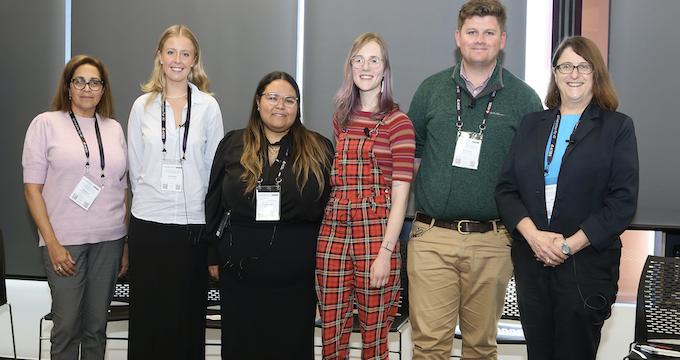
Supplied: header image of student panel at the symposium . From left to right: Professor Maria Raciti, Tayla Roberts, Kathleen Nelly, Ebe Ganon, Dylan Storer, Professor Sally Kift

Civics: Is there enough room in the syllabus?

Politicians and policy makers constantly express concern over students’ lack of civic knowledge and their lack of engagement as citizens; their understanding of democracy. At the same time, Australian students consistently fail to demonstrate basic proficiency in the national assessment of civics and citizenship education (NAP-CC)

The politicians have a point. It is in all our interests to have an engaged and knowledgeable citizenry. The question is how to go about improving civics and citizenship education (CCE) in a way that makes a meaningful difference? 

Renewed focus

The current round of hand-wringing about CCE has found expression at both state and federal levels. In February, the NSW Educational Standards Authority (NESA) announced that the revised HSIE syllabus, to be revealed later this year would have a “renewed focus” on civics and citizenship education, although we are yet to see what this renewed focus looks like. Meanwhile, last week the Commonwealth Joint Standing Committee on Electoral Matters held public hearings (chair Kate Thwaites pictured in header image) as part of the inquiry into civics education, engagement and participation in Australia. It was disappointing that amongst the many experts appearing before the hearing last week, none were current classroom teachers. 

It is hard not to notice that it is history teaching, or more specifically history teachers, who are (paradoxically) considered both a key cause and solution to the deficiency in student knowledge of CCE, with former education minister Alan Tudge famously calling for a more “optimistic” version of Australian history to be taught in classrooms so that “Individual students learn to understand the origins of our liberal democracy so that they can defend it, they can protect it, they can understand it, and they can celebrate it”.  

Voices and concerns of students

Despite what might be offered by the latest round of curriculum reform in NSW, and without pre-empting the findings of the parliamentary inquiry, it needs to be said that efforts to pursue CCE through more mandated content in humanities courses, won’t on their own improve the quality of student civic knowledge or engagement. Efforts to improve CCE need to include the voices and concerns of students and teachers, and consider the different contexts in which teachers approach CCE across the diversity of Australian classrooms. 

Teachers get it

I’ve undertaken research with history teachers across NSW, and it’s clear from my interviews with them and time spent in their classrooms that they do understand history education as having a pivotal role in the teaching of CCE. But critically, they see history as doing this through the teaching of disciplinary skills such as the critical reading of sources, the ability to ask robust questions and notions of the contestability of knowledge, rather than through the teaching of any sort of ‘canon’ of knowledge about Western democracy and civilisation. In an era of misinformation and fake news, the ability of students to ask critical questions – of individuals and our institutions is perhaps more important than ever. 

The syllabus and HSC are hindering, not helping CCE 

Whilst it’s easy to talk about adding more CCE content to the syllabus, teachers report that they are already working with a history curriculum that they describe as ‘full’ and ‘tight’ and which as a result doesn’t allow any wiggle room to explore areas of passion or interest for their students. We need to be careful about making the syllabus even less flexible for teachers to work with. 

For one teacher in my study – Jane – who is an expert in local Aboriginal history and storytelling, the formal curriculum in senior history courses, with their emphasis on world wars and Western history, limits her ability to share this expertise with her students.

As a result, Jane is deeply cynical about attempts to formalise civics and citizenship education through mandated knowledge in the history curriculum which she sees as alienating, “boring” and “deeply irrelevant” for her students. Jane instead tries to engage with democratic notions through inclusive pedagogies and the building of a classroom community.

Lovely kids but so sheltered

For another teacher in my study – Max – who teaches in a high-fee independent school in Sydney, it is not only the curriculum that frustrates his teaching of CCE, but also the high stakes assessment of the HSC. Max describes his students as “pretty Anglo [and] affluent, they are so sheltered here. They are lovely kids, but they are so sheltered”. Max understands his task as being to challenge some of the ways in which his students are ‘sheltered’ through exposure to challenging content and ideas, and grappling with the contestation at the heart of history education.

But Max also admits that the primary expectation of him as a teacher of senior students at his school is to get his students the best possible result for their Higher School Certificate examination. This means that in his senior history classrooms, with students on the precipice of voting, he prioritises ‘teaching to the test’ and this means sometimes foregoing opportunities to pursue rich and meaningful CCE. 

CCE in an inequitable education system 

While both Max and Jane are passionate teachers of history who are seeking to embed CCE in their classroom, they are not doing so on an even playing field. Educational inequity is rarely discussed as a factor in improving CCE in Australia, and yet the resources and opportunities afforded to Max’s students make a huge difference in his ability to connect their learning in history to the development of their civic knowledge. For Jane, teaching in an under-resourced, regional school, she struggles to get students to comprehend the broader significance of their learning in history:

I am trying to teach them who Mussolini is, but they have no idea who their own Prime Minister is, that’s really quite a challenge….

I’m sure at many schools that wouldn’t be a problem. At some schools the name of the Prime Minister is on the honour board.

Jane’s insight is a telling one, because indeed the honour boards of Max’s school are replete with the names of Australian politicians and other notable individuals. Messages about democracy, participation and active citizenship are encoded into the very fabric and structure of our education system which provides so much to some students and so little to others. And yet we wonder why so many students begin their adult life feeling disengaged from politics and public life? 

Let’s hear more from teachers when we talk about CCE 

As we look around at the political and environmental challenges being faced by the next generation, there is particular urgency to engaging with the question of how to best develop in our students an appreciation for democratic ideals, a valuing of inclusive notions of citizenship and the knowledge and capacity to be empathetic and engaged civic actors. But improving student knowledge and capacity in these areas won’t happen if all we do is think about content in the curriculum without parallel regard for the systems and structures at work in our education system more broadly. History teachers are well aware of the way in which notions of citizenship and democracy can be pursued in their classrooms, and we would do well to listen to and value their insights. 

Claire Golledge is a lecturer in education and the co-ordinator of HSIE Curriculum (Secondary) in the Sydney School of Education and Social Work. Prior to taking up her position at the university, Claire worked as a secondary teacher of humanities, as well as in school executive leadership positions, leading teacher professional learning.

Our header image is from the Facebook page of Kate Thwaites, chair of Commonwealth Joint Standing Committee on Electoral Matters

Now, more than ever, we need change in Indigenous education

This week (May 27-31) is National Reconciliation Week. The theme this year is ‘Now more than ever’. We need change in Indigenous education now more than ever. We share our research on excellence in Indigenous education where we ask big questions about what is needed to shift Indigenous education from gaps to excellence.

Excellence is a concept that has been used across education as a way of describing an aspiration to be outstanding in the delivery of schooling imperatives. Recognised as a culturally constructed term, the common thread in understanding excellence is striving to be the very best at whatever the endeavour is. 

When we look at the language and aspiration in Aboriginal and Torres Strait Islander education policy and practice, the dominant framing is that we aim to ‘close the gap’. 

The Excellence in Indigenous Education project started with this observation and a curiosity about how deficit language impacts the way that educational leaders and practitioners conceive of and enact their work in schools. 

Our research

We commenced our pilot study in 2019 with three secondary schools in Queensland’s urban, regional and remote areas. And we asked big-picture questions about what Indigenous people, school leaders, and practitioners think excellence in Indigenous education looks like. We also asked for practical examples of what excellence in Indigenous education looks like in practice. These questions were asked through face-to-face collaborative yarning. 

We recently published findings in the Australian Educational Researcher journal from Indigenous voices in the pilot study as we know it’s vital to centre the voices of mob in policies that affect us. 

Key findings

There were distinct themes that emerged from the analysis when we explored how people conceptualised excellence in Indigenous education. 

Theme one: the young person – identity and building young people up

The conversations with participants about excellence in Indigenous education showed the importance of the young person’s experience. This study emphasised the interwoven themes of culture, identity, and empowerment for young people; illustrating a reimagined narrative of Indigenous education. The participants agreed that a strong identity is crucial for Indigenous students’ resilience and success in educational settings. They argued that understanding one’s culture and identity is a protective factor and a source of pride and belonging in an environment that often marginalises Indigeneity. The consensus was clear: knowing and embracing one’s cultural identity transforms negative perceptions into positive educational experiences. The study also focused on the importance of supporting the aspirations and achievements of Indigenous young people by building them up. Empowerment through education was seen as key, with community engagement and school-based initiatives appearing to play vital roles. 

Theme two: school culture and leadership

The culture of a school and the effectiveness of its leadership was the second theme to emerge. Schools should be welcoming and inclusive to Indigenous students, staff, families and community. It was made clear that the way educational leaders engage with the community is crucial and they need to be authentic, purposeful, and relational. However, not all Indigenous peoples in this study reported an inclusive culture in their schools but those that did have inclusive leaders expressed that they had the freedom to think and work ‘outside the box’ within an educational context.

Our study highlighted the need for culturally competent leaders in Indigenous schools who can implement a shared model of leadership.

Theme three: relationships

The third significant theme in our study was relationships, this finding aligns with Indigenous worldviews and ways of knowing being and doing. The theme of relationships also links in with identity. Engagement with Indigenous students and families should be grounded in relationships, not just school priorities. Positive relationships and high expectations between educators and students can be a strong motivator for students to be engaged at school. Additionally, relationships need to stem out into the broader community and with community Elders. The unique knowledge Indigenous people bring to these relationships can have a significant impact on Indigenous excellence in schools and Elders have voiced that they know what’s best for our kids as we have lived experience and can share the knowledge we have with young people. However, schools should not take the knowledge and time shared by the community for granted. 

Strengthening Indigenous voices

Since completing the initial research, we have undertaken a further study to expand the data to foreground the voices of Aboriginal and Torres Strait Islander peoples on excellence in Indigenous education. Using a community sampling method, we invited Aboriginal and Torres Strait Islander community members to participate in an online survey. Within two weeks of launching the survey, there were over 200 responses, with voices captured from over 90 mobs from all states and territories across Australia. We are currently analysing these data but thought we would share some of the important messages shared with us to date. 

When asked, “What does excellence look like in Indigenous education?” the responses are rich and diverse. Central tenants to the responses were the importance of culture, strengths-approaches, well-being and understanding truthful histories. 

What participants shared:

“…..when I talk about excellence in education it is from an Indigenous perspective and what I know is what is good for First Nations students, is good for everybody because it’s about relational practice, strength based, individual and high expectations. The difference with Indigenous education is acknowledging that not telling the full story of Australia’s history by negating First Nations valuable contribution is damaging to all Australians so Indigenous Education needs to also encompass new Learning, Unlearning and then Relearning about who we are as Australian, including all the untold First Nation’s story, which requires ongoing truth-telling, deep listening, deep understanding and then authentic action through First Nations voice.” 

“Students identifying and achieving individual educational, personal and cultural goals with teacher and community/family support”

“Excellence in Indigenous education is prioritising self-determination and the well-being of our mob in classrooms. Not just thriving academically, but socially and emotionally too – excellence is more than good grades. Feeling proud of who you are in the classroom and feeling supported and strong so you can be the best version of yourself – this view of excellence in Indigenous education supports the development of strong Indigenous futures and this benefits the nation as a whole.”

“To me Indigenous education should involve respect, valuing, appreciating and celebrating First Nations culture and traditions. By doing this allows the process of understanding, following protocol and opportunities for community involvement to create ongoing learning that has been part of this country for over thousands of years. Indigenous education should be everyone’s business.”

Excellence in Indigenous education

“Excellence in Indigenous education reflects a commitment to honouring Indigenous cultures, languages, and knowledge systems while promoting academic success, cultural pride, and community well-being.”

As much of the strategic direction in education centres around policy, it was important to gauge participants’ perspectives on whether it was important for Indigenous education policy to aspire to excellence. All survey participants shared that they either agreed or strongly agreed that it was important to aspire to excellence in Indigenous education policy. Shifting the narrative in education policy from “gap-gazing” to aspirations of excellence is timely. Some participants shared these perspectives in their vision for excellence in Indigenous education for future generations:

Aspiration to excellence

“ …..Closing the Gap education outcomes are scrapped and, in turn, deficit discourses. Indigenous students are no longer a ‘problem to be fixed’ but able to practice culture and engage meaningfully in education systems that suit them and their needs.” 

“We should stop saying ‘closing the gap’. Yes it should be a policy, should drive funding priorities and be made accountable through reporting. But the overt deficit thinking means whilst we aim to build Aboriginal people up through programs, we tear us down in the minds and thought processes of ‘well to do’ others. Need to shift from the mainstream thinking if we succeed, we’ve done something amazing.”

To understand some practical ways forward, we asked, How can schools work with local Indigenous communities to create a culture of excellence in Indigenous education? It appears from the preliminary analysis that there is a strong emphasis on Indigenous-led solutions, respectful relationships, providing space to beginning heard and valuing Indigenous families and communities to create this culture in schools. Participants shared: 

“Value community as equal and that know best for their children”

“Let the Indigenous communities lead the process- they are the knowledge holders of creating the excellence and for it to be meaningful and not tokenistic”

“Listen to the voices of our Indigenous young people in classrooms and their families – create space for input from Indigenous families. Also, celebrate success stories of Indigenous students (beyond attendance rates).”

We anticipate to publish the findings of this larger study over the next few months. 

How to make a start

Things educators and policymakers could do to get started in transforming excellence in education:

  • Make identity-affirming practices a priority in all schools. Some examples of identity-affirming practices are aiming to have your Indigenous staff ratio equivalent to your Indigenous student numbers, incorporating local perspectives and knowledges across all aspects of the school, and ensuring diverse Indigenous peoples and role models are represented in all aspects of the curriculum. 
  • Consider how Indigenous leadership is incorporated in school settings. We know that Indigenous leadership is vital in moving Indigenous education forward. Yet, the Indigenous-identified roles are usually among the school’s lowest ranked. Consider how Indigenous leadership can be elevated structurally in education moving forward.
  • Embed relational approaches by making space for people to connect and share – this means having fewer transactional interactions and spending more time building relationships over time.


Left to right: Marnee Shay is an Aboriginal educator and researcher and an associate professor in the School of Education at the University of Queensland. Jodie Miller is an associate professor at the  University of Queensland. Her work focuses on improving the educational outcomes of students most at risk of marginalisation in school, particularly in the fields of Mathematics and Indigenous education. Danielle Armour is a Kamilaroi woman and senior lecturer at UQ, she has worked in Indigenous education for over 20 years. Suraiya Hameed is an interdisciplinary leader, educator and researcher specialising in Educational Leadership at University of Queensland. She researchers within the areas of Educational Leadership, Global Policy and Education & Equity, Inclusion, Diversity and Culture.

Are student encampments sites of pedagogy and learning?

When you enter the encampment, you see colour: the red, green, black and white of Palestinian flags and posters and the red, yellow and black of Aboriginal flags, clusters of multicoloured tents and the vibrant hues of children’s artwork. If you walk around, you pass the community library, public notice boards and tables sharing leaflets. There’s a central gathering space with circles of chairs and cushions in watermelon red and green. There may be paintbrushes scattered around from the latest banner painting session, a film screening underway. There may be a researching bee taking place, or myriad teach-ins. You’ll likely see a plurality of students of various religious, racial, gender, class and political positionings, all committed to working together. You might catch the scent of smoky fire cheese fry pans or see students cooking up some other feast from the community pantry.

If you stop and browse in the library or scan the noticeboard, chances are you’ll be greeted by students who are keen to chat about their concerns, local and global happenings and what the encampment is demanding: disclose ties to weapons companies, all funding and research deals; divest and cut ties with all weapons manufacturers; solidarity with Palestine and an end to the occupation. And chances are students will tell you it’s good that you are here. Together, we might ask the question of how can university students and staff support each other to teach and research in solidarity with Palestine? The message from students is clear: “Come down to the Gaza Solidarity Encampment. Help us build the anti-war campaign and stand in solidarity with Palestine.”

A global movement

Similar Gaza solidarity encampments have arisen on university campuses globally. Most establishment figures and institutions have insisted on crackdowns, closures and punitive measures. Encampments in the USA, Germany, the Netherlands and Greece have suffered threats and harsh physical and procedural treatment from police and universities.  Mainstream media portray the encampments as hotbeds of antisemitism and violence. Such portrayals bear little resemblance to these camps’ operations.

Through social media the students decide on their own portrayals. They also publish formal statements and have their own student news outlets. Sharing is to inform, explain, inspire, warn. Confronting images of the NYPD invading student encampments across New York City ricochet around the globe.

What encampments teach

All encampments raise awareness about the justice of the Palestinian cause and the horrors of the war in Gaza.  They demand their universities disclose and end their association with suppliers of arms to the Israeli state. Banners read ‘Disclose Divest. We will not stop. We will not rest’. ‘Stop the lies. Cut the ties’. If they meet with university leaders, if a university agrees to some demands, the students reveal it. They denounce those leaders who refuse to talk.

They post images of camps, campus marches with allies, occupations, die ins, rings of staff protecting students, of graduation ceremonies where gowned students unfurl Free Palestine banners and the Palestinian flag as they receive their awards. Through social media they hear each other’s chants and slogans, see each other’s banners and flags. ‘Stop Genocide Ceasefire Now’ ‘Jews against Genocide’ And they hear each other’s insistent voices— speaking, praying, singing, reciting poetry. Messages of support and solidarity flow out, flow in. Palestinians in Gaza send thanks. The students share lists and maps showing the latest encampments. A map of the Nordic countries is headed Students all across the Nordics are mobilising …. 13 encampments, 12 cities, 4 countries. Another map appears of Belgium’s five encampments; similarly, a map of Sweden.

They also share why, when and how some encampments end—seldom willingly. One student asks ‘What kind of system do we live in where an institution can call the police on you for opposing genocide?’

Pedagogic spaces

Moving through any encampment you might see a banner with the encampment’s ground rules, laying the foundation for a community collectively governed. We might see students reading books from the encampment library or gathering to prepare the next speech, rally, banner or chant. The air will be abuzz with the sound of community in the making. Students are becoming practiced in all manner of community actions, educating, caring and creating.

In the encampments, we see, feel, hear, envision and are invited into the cocreation of student-led pedagogies of action, protest, disruption and insurgence pedagogies of love and carepedagogies of peace and encircling pedagogies that exceed/seed/cede  We see the enactment of education as something you do with and for other people.

A different way of doing education

University encampments invite us into a different way of doing education that defies institutional control. These are spaces that nurture student-led movements which are disrupting and expanding the boundaries of education. Such student-led projects extend beyond racial, religious, national and disciplinary boundaries, and refuse to be co-opted into the institutional status quo. Attending to student-led movements such as university encampments for Palestine opens possibilities for us to revitalise universities as generative spaces of study.

These students are refusing to spend their time of higher learning being processed as obedient units of the colonial class system that sacrifices our humanity, in one way or another, to the death spiral of global capitalism. They are insisting, instead, upon their right to create home, joy, and liveable futures. Eugenia Zuroski

In the words of Eman Abdelhadi, the encampments are “gifting a new experience of wholeness”. They have “helped heal some of the wounds of the past seven months and reenergized us for the fight ahead.”  The students’ university’s connections with the world confront the public university’s silence about and repression of what is happening in the world.

Don’t ask why students are protesting. Ask what died in you that you are not

The students have highlighted scholasticide in Palestine. The destruction of universities, schools, libraries, museums. The loss of many teachers, students, academics, intellectuals, writers, artists. In contrast most university leaders have been mute — failing to mourn the loss of what they claim to value.  Failing to offer solace.  Failing linguistically too. Any encampment student could explain that From the river to the sea and Intifada are not antisemitic and have special meaning for the Palestinian people. Largely, the leadership ignores this. Neither do they want to learn from Jewish members of the encampments who insist that Jewishness must not be used to justify genocide. Like many members of the Jewish community, when they say, Never again, they mean never again for anyone.

What university leaders could learn

University leaders could learn from the students’ ethical clarity. The students are providing the moral leadership expected from sites of knowledge and learning. And many staff are fearlessly joining them, despite the silencing chill from above. In contrast university leaders talk of Jewish students’ fear of attending campus and of the inconvenience of disruption and damage. If they visited the encampments and looked at the students’ screens, they would see the everyday, every night fear, disruption and damage of the Gaza war. This might help them gain a sense of perspective.

And having witnessed the encampments’ liveliness, diversity, community engagement and transnational solidarity they might think twice about the loss of the university’s soul and conscience under their watch.  

Our job is not to protect the institution or its timelines or its profits or its myths of impartiality. Our job is to be strong for our students and to protect them every way we can so that they can realize their own visions of peace and liberation for Palestine. As you go to class today, remember, there are no universities left in Gaza. – Eugenia Zuroski

Main image: Student encampment at Adelaide University – Kaurna Yerta 5 May 2024. Photo: Jack Desbiolles

Jane Kenway is an elected Fellow of the Academy of Social Sciences, Australia, Emeritus Professor at Monash University and Professorial Fellow at the University of Melbourne. Her research expertise is in educational sociology.  

Katie Maher lectures in Education at the University of South Australia. She co-chairs the Pedagogies for Justice research group and is a Series Editor for AARE’s Local/Global Issues in Education book series.

Want Indigenous university students to succeed? Here’s how

Recommendations in the Universities Accord reveal a focus on increasing enrolments of under-represented groups including  Aboriginal and Torres Strait Islander students. 

Enrolling students is just one part of the piece.  Our research identifies what factors contributed to Indigenous students’ graduating from university. We conducted a study with 308 Indigenous university graduates to understand and identify success factors. Economic conditions, social environment, and individual characteristics were the most crucial factors that contributed to Indigenous university completions.

Emphasis on financial support

Increasing Indigenous student enrolments at universities  must be accompanied by an emphasis on the financial support and resources needed to ensure both the economic conditions and the social environment at university are fostering success. Financial stability while completing a degree is essential, meaning the financial support offered at universities may need to be reviewed to ensure Indigenous students are having opportunities to access financial support, if needed. There also needs to be a focus on supportive networks and access to counselling.

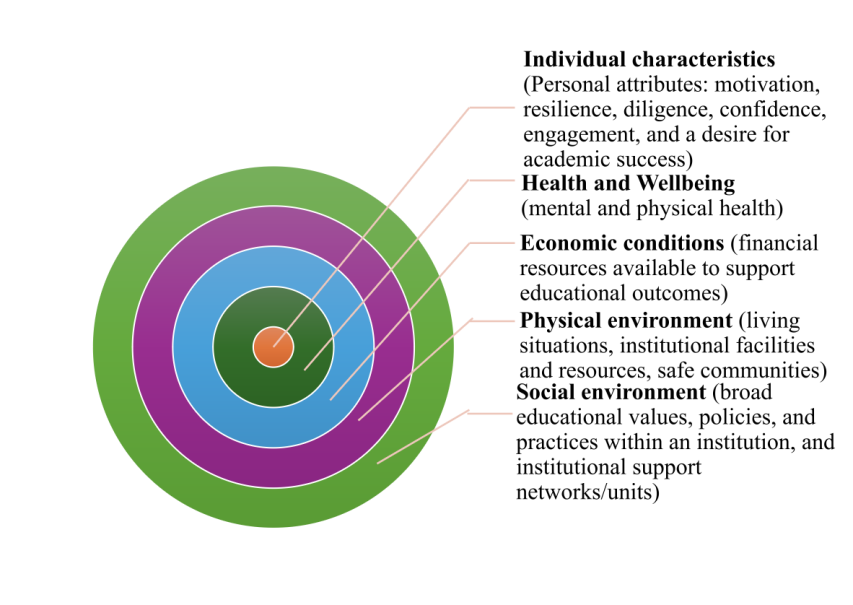
In our study, we developed the Higher Education Success Factor (HESF) model which highlights what universities should focus on. Our findings could be used to address the concerns raised in the Accord report.  

What is Higher Education Success Factor (HESF) Model?

The Higher Education Success Factor (HESF) model is a framework used to investigate the factors that influence the completion of university degrees, specifically for Indigenous Australian students. The model comprises five categories: individual characteristics, health and wellbeing, economic conditions, physical environment, and social environment. It emphasises the critical role of external factors (economic, physical, and social) as well as individual attributes in influencing student success in higher education. 

Figure 1. Higher Education Success Factor (HESF) Model (Pham et al. 2024)

Effectiveness of the Higher Education Success Factor (HESF) 

We examined five factors: individual characteristics, health and wellbeing, economic conditions, physical environment, and social environment. We found that economic conditions proved to be the most influential factor on Indigenous graduates’ completion, followed by the social environment factor and then individual characteristics. The health and wellbeing factor and the physical environment factor both had less influence on completion compared to the other three factors. 

Importantly, the HESF model effectively identified the economic conditions, social environment, and individual characteristics as critical aspects, emphasising the need for support from educators, peers, and institutional services within Australian institutions. A key element of the economic conditions is the provision of financial support, particularly in the form of tuition and living expenses, to enable students to focus more on their studies and reduce stress, which align with Accord Priority Action 3

Social environment

The social environment cannot be overlooked. It influences the learning environment which needs to be “safe and secure learning” and have “good facilities” for learning to occur.

The study also highlighted mental health issues as significant factors leading Indigenous students to consider withdrawing from their studies. We suggest that university policymakers and educators could use the findings from the HESF model to identify potential weaknesses within their institutions and provide comprehensive support for Indigenous students at all levels of university education. Additionally, we proposed the potential expansion of the HESF model’s application to explore retention and success challenges in diverse settings beyond higher education. This will further enhance its utility and impact. 

The HESF model’s research-based approach provides evidence to support the recommendations made in the Accord report. By demonstrating the effectiveness of addressing specific factors in improving Indigenous students’ success, the model can help build a case for implementing the strategies and initiatives proposed in the report.

Importance of Comprehensive Support for Indigenous Student Success

Our research offered valuable insights into the factors influencing Indigenous student success in higher education and identified challenges faced by Indigenous students in completing their degrees. The findings from the HESF model can guide universities and policymakers in developing targeted support services and interventions to address the specific needs of Indigenous students. For instance, the model underscores the importance of financial support (as part of improving economic conditions), social support networks and mental health services. These areas are not only emphasised in the Accord report as needing attention but are also highlighted as concerns in the Aboriginal and Torres Strait Islander Health Performance framework.

Last, the HESF model can be used as a tool for monitoring and evaluating the effectiveness of support services and interventions aimed at improving Indigenous education outcomes. By tracking progress across the five factors, universities can assess the impact of their initiatives and make data-driven decisions to refine their approaches, aligning with the Accord report’s emphasis on accountability and continuous improvement.

From left to right: Thu Pham is a senior research assistant in the Indigenous Research Unit at Griffith University. Her research areas include leadership in higher education and Indigenous students’ success. Thu’s doctoral research study focused on leadership to support quality improvement in Vietnamese higher education. She is on LinkedIn.

Levon Blue is an associate professor at The University of Queensland in the Office of the Deputy-Vice-Chancellor Indigenous Engagement. Her PhD focused on financial literacy education practices in a First Nation community in Canada. She is a member of Beausoleil First Nation in Canada. Her research area includes financial literacy education and higher education with Indigenous peoples. She is on LinkedIn.

Angela Baeza Pena is a lecturer at Carumba Institute at Queensland University of Technology. She is Diaguita First Nation from Chile. Her PhD focuses on understanding the experiences of teachers and Indigenous community members in providing Indigenous education in rural and remote areas. Her research area includes Indigenous education, teacher professional development and higher education with Indigenous peoples. She is on LinkedIn.

Peter Anderson is a professor and the Director Indigenous Research Unit at Griffith University, Walpiri and Murinpatha First Nations of Australia. His research theorises the understandings of the organisational value of academic freedom in Australian universities and more broadly in the polar south. His research areas include organisational leadership, Indigenous peoples’ education and teacher and academic professional development. He is on LinkedIn.

Melanie Saward is a proud descendant of the Bigambul and Wakka Wakka peoples. She is a lecturer of creative writing in the School of Creative Practice at QUT, a PhD student, and an author. Recently, she has published a Springer Brief titled: “Higher Degree by Research: Factors for Indigenous student success”.

Budget 2024: The government must support universities, students – and research

This is the third in a series of posts on the 2024 Budget. Today: higher education by the University of Melbourne’s Abigail Payne, director of the Melbourne Institute. Last Friday: early childhood care and education by the University of New England’s Marg Rogers, postdoctoral fellow at the Manna Institute Last Thursday: school funding by Curtin University’s Matthew P. Sinclair, a lecturer in education policy.

I approached this year’s budget with excitement and with trepidation. 

Why excitement? This budget offered the potential to embrace some of the more positive insights from the Universities Accord Report.  Trepidation? Would we see the government fail to address the more challenging aspects of working at a university in Australia.

I had hoped to write about the promise of renewed investment in research, in the financing of universities, and supporting the important role that universities play for progressing innovation and delivering solutions that will support strong economic growth for Australia. 

Frankly not much was announced about any important investment that must be made to strengthen and invest in our universities.  

A quick search on terms revealed that the term “student” appeared 109 times, higher education 27 times, university 27 times, VET 25 times, TAFE 7 times, science 35 times, and research 65 times. This blog will focus on the budget announcements for addressing enrolment and the servicing of debt.  

Importance of Increasing Tertiary Education Attendance

Let me start with the promising information. A goal of creating a highly skilled workforce that includes a tertiary attainment target of 80 percent by 2050. This is both laudable and ambitious.  As Figure 1 depicts, Australia is ranked 10th amongst OECD countries for educational attainment (tertiary or higher) for individuals aged 25 to 34. The current rate for those living in Australia is 49 percent for men and is 63 percent for women. 

Is increasing access to universities only about the money?

The budget also recognizes the importance of broadening access to encourage more underrepresented students to attend university. This importance will include a commitment for more needs-based funding.  What this means for the budget is vague.  And is the solution to achieving both an 80 percent target and broadening access simply about money? Increased financial commitments were announced in the budget: $1.1 billion over five years for expanded access and $350.3 million to expand access to free university courses. 

Of course, money matters. 

But research has shown, time and time again, the returns to further education are positive. That has not wavered over time. Why are we not observing high demand for university places? 

Increasing educational attainment must include considerations: how we encourage students to prepare for pursuing these degrees; how we support our schools to deliver what is needed for success in university; and what we can do to support growth in the tertiary system. All that, while maintaining high standards to ensure graduating students are best prepared for opportunities that will require higher levels of skill and knowhow.

Addressing accumulated debt – will changing indexation solve the problem?

As has been well reported, as tuitions have risen, so has student debt. Figure 2 illustrates the dramatic increase in student debt based on tax data obtained from the Australian Tax Office, computed based on the year of the last observed loan for a student, reported in real ($2022) dollars. When HECS/HELP was introduced, the average accumulated debt at the end of schooling was $10,000 in today’s dollars.  Today, the average is nearly $40,000. If we look at remaining debt after five, ten, and fifteen years (ignoring those who have fully repaid their loan), those with debt after ten years are still not making much of a dent in repaying the debt.

Increasing debt, and in more recent years, increasing effective interest on this debt has risen. This means that it is taking longer to repay debt.  Figure 3 illustrates this fact.  Using tax data and the loan information from the Australian Tax Office, we depict the share of students who have repaid their student loan debt after five, ten, and fifteen years, respectively, based on the year of the last year a loan was received.  For example, if a student enrols in university in 2000 and takes out three years of loans between 2000 and 2002, the student is identified as having received her last year of loans in 2002.

What’s changed

When tuition was on the order of $2,000 (nominal) per year (1989 to 1995), approximately 30 percent of the students had repaid their loans within five years and 78 percent had repaid the loan within ten years. Fast forward to more recent periods: only 20 percent of students have repaid their loans within five years. Only 55 percent have repaid their loans within 10 years.  As debt has increased so has the time to repay. 

The budget has recognized the challenges of loan repayment. They have announced that the effective interest rate for these loans will change. The rate will be the lower of either the Consumer Price Index or the Wage Price Index. This use of different measures to capture “inflation” is welcomed. 

Are the cuts to debt fair?

The Government has also indicated it will cut $3 billion in student debt, providing relief for those with existing debt. That’s welcome. But is it fair for those who no longer hold debt but paid off their loans in recent years?  One should also consider the potential signal it serves regarding opportunities to pay off one’s loan faster than is required. And finally, what about those who have never held a loan but are struggling financially?

Confusions around tuition rates and debt repayment – does it cause a student to pause before enrolling?

Revisiting the question of how to increase participation in tertiary education, we should think about the role increasing debt plays on the decision to pursue a university degree. The income-contingent loan repayment scheme should be applauded for creating a structure to encourage participation while deferring payment for that participation.  

What started as a simple concept, however, has become convoluted. It may lead to confusion and a decision not to pursue further education. As Figure 4 illustrates, tuition has not only increased but there are differential tuition rates depending on the program of study.  This aspect makes sense if the tuition rate reflects the cost of delivering the given program of study. This simple depiction of three or four rates, however, quickly gets confusing when a student pursues courses in different programs. Once enrolled, depending on course selection, a student can end up facing differential course fees, making it even more challenging to understand the total cost of a degree before enrolling in university. 

Source: Parliamentary Library based on Department of Education,  https://www.aph.gov.au/About_Parliament/Parliamentary_Departments/Parliamentary_Library/pubs/rp/rp2021/Chronologies/HigherEducation

Potentially even more confusing for a student who wants to be fully informed before university registration is the repayment rates. The basic principle is that repayment is tied to earnings. With the minimum repayment amount equalling a percentage of one’s income.

But the percentage and thresholds vary across incomes and over time. Figure 5 depicts the minimum repayment rates. These have changed both with respect to what is owed as well as the income threshold for computing the amount owed. Given the repayment rates can adjust on a year to year basis, it would be very challenging to figure out at the time of university registration how long it might take to repay a student loan. 

Source: Parliamentary Library based on Department of Education,  https://www.aph.gov.au/About_Parliament/Parliamentary_Departments/Parliamentary_Library/pubs/rp/rp2021/Chronologies/HigherEducation

Encouraging greater participation and meeting 2050 targets

Encouraging greater participation in tertiary education must be more than making a proclamation. We can do more to invest in our institutions, to identify the factors that contribute to a decision to pursue a degree or diploma beyond secondary school, and to provide transparent mechanisms for capturing tuition and loan repayment. To encourage greater participation in tertiary education, information on costs and expectations for repayment should be clear and easy to understand. 

Government has made a move towards reducing the costs associated with loan indexation. It has also provided temporary loan forgiveness, and is investing to promote greater access to university. But it should do more to embrace and address the challenges students AND universities face.

Abigail Payne is the Director & Ronald Henderson Professor at the Melbourne Institute: Applied Economic & Social Research at the University of Melbourne. Her research is wide- ranging and includes the effects of policy on educational outcomes, schooling transitions, gender differences, and student performance; the determinants of poverty and disadvantage and the mechanisms for reducing poverty; and charitable giving and the role played by nonprofits in service provision.