

AARE blog

Scary school stories: from zombie data to systems at war

Long-standing challenges in education confront the new Labor government: the teacher shortage; teacher pay and conditions; the equitable funding of schools; student performance in standardised tests; and student behaviour and attendance.

It has become all too common for news outlets to seek the opinions of think-tanks, rather than those who have first-hand experience and who might be able to offer solutions to the problems. So, in attempt to give ‘voice’ to these other views, we talked to six education experts: a former NSW education minister, a former principal and education commentator, the president of the Australian Education Union, a journalist, a maths teacher and a prominent academic. 

One voice often overlooked in education controversies  is that of the classroom teacher. Julie Moon is a recently retired teacher who’s taught in rural NSW and metropolitan Sydney, as well as Papua New Guinea. She was an organiser for the NSW Teachers Federation, involved in many negotiations with the NSW Department of Education. In her conversations with us, Moon highlights significant changes to  her workload –  it’s incessant and relentless data collection requirements, that is, data collection for the “sake of data collection”. She says: “It creates a workload that’s unnecessarily onerous.” As  a teacher she is continually collecting data but this task becomes burdensome when she is required to compile additional documentation that may or may not be read or acted on at other levels of the bureaucracy. 

Ongoing data collection was also raised by former NSW education minister Adrian Piccoli who maintains that although initially worthwhile, data collection has now reached a “kind of tipping point where it becomes a negative”. Piccoli says we’ve reached a point where data collection now “drives teachers nuts”, adding to the constraints on teachers’ time and energies, and therefore limiting the opportunity to exercise their professionalism as classroom practitioners. 

Having worked as education minister (2011-2017), Piccoli is aware of the importance of establishing shared goals between state and federal governments. In fact, and even though he was a member of the NSW Coalition government, Piccoli says that it was “easier and smoother working” with the Federal Labor government and Peter Garrett than with the Federal Coalition government that assumed power  in 2013. Both  Piccoli  and Garrett held bipartisan education goals, promoting the Gonski reforms on school funding, and although there were often differences of opinion, he maintains that tension in education debates can be constructive, allowing for ideas to be “tested and challenged”.  

Realities of equity and school funding are close to the heart of former principal and education commentator, Chris Bonnor whose latest book scrutinises school funding in Australia. Bonnor argues that our education system has never been a ‘level playing field’ despite the best efforts of some governments; and decades-long neglect of key issues has seen the gap in academic achievements widen as the economic gap across the community widens. He also asserts that if a public education system is available to all but has to compete with a private system that has very few obligations: “it’s funding system at war with itself”. Consequently, the question of how the private and the public-school systems co-exist, must arise. 

cool This debate led us into a conversation of how education in schools is covered in the media. To gain some insights, we talked with The Age and Sydney Morning Herald journalist, Jacqueline Maley. While Maley’s writing interests extend beyond education she understands the political dimensions and the many polarising issues, for example, phonics. She is aware that certain topics will attract “blowback”; and as a result, Maley is careful to research her topics and adopt a measured tone and approach. We asked  about advice she might give to school students who are thinking of journalism as a career; her recommendations focused on an inherent “curiosity and an outward looking attitude” as well as a very “strong work ethic and an ability to think laterally when you’re looking at a story”. 

Although not preoccupied with education and the media at present President of the Australian Education Union (AEU), Correna Haythorpe’s most recent work has revolved around campaigning for reduced workload, improved conditions and a rise pay for teachers. She is investigating ways to alleviate the teacher shortage which she says in the latest AEU national survey indicates that the average working week for a classroom teacher is 56 hours, with much of it constituting unpaid work.

Possibly the current challenges in our schools are a ‘perfect storm of neoliberal discourses’ in education from the 1980s onwards. This is a persistent theme in our exchange with renowned education scholar Professor Alan Reid. In his latest book, Reid recounts the introduction of private sector practices – ‘corporate managerialism’ – where education became “awash with key performance indicators, vision and mission statements, strategic plans and intrusive accountability”. The mantra of ‘choice and competition’ became ubiquitous. Parents began selecting schools for their children, in much the same way as one might select an item of clothing from a rack in a department store. The thinking was that the best way to improve quality was to get teachers and schools to compete against one another, with the ‘customer’ being the parent and the school or teacher, the ‘product’. Many ‘big ideas’ in education were lost in the move toward a global education ‘industry’.

While many significant challenges remain for most Australia education systems and their communities, a new podcast series “Talking Teachers” by UTS teacher education academics, Dr Don Carter and Associate Professor Jane Hunter reveals there are many fresh ideas for Federal Education Minister Jason Clare and a newly elected NSW Labor government to draw on.

Dr Don Carter is a senior lecturer in the UTS School of International Studies and Education, he specialises in working with teachers to investigate innovative writing pedagogies to improve student performance and outcomes across the curriculum. Carter is a chief investigator, with Linda Lorenza, on the Emerging Priorities Program research into arts online learning.

Dr Jane Hunter is an associate professor in the UTS School of International Studies and Education, with expertise in pedagogy, curriculum, practitioner inquiry, technology-enhanced learning and teacher professional learning. In 2019 her research was awarded High Impact in the first Engagement and Impact Assessment by the Australian Research Council.

This sure ain’t Hollywood: It’s a long way from neurons to the classroom

Let’s face it, it can be fun to poke holes in the premise of silly Hollywood films. The idea that a character portrayed by Scarlett Johansson has tapped into the 90% of her brain we don’t use provides a basis for glossy action set pieces but isn’t founded in reality. Research in neuroscience does not support the idea that we only use 10% of our brains. 

The recently released discussion paper from the Teacher Education Expert Panel recommends that initial teacher education students in Australia learn about ‘how the brain learns and retains information’ and are inoculated against such neuromyths. These include the idea that people are ‘left-brained’ or ‘right-brained’ or that students should be instructed in their preferred modality-based learning style. 

During the last few decades, neuroscience has uncovered more about the inner workings of our brains than in the entire recorded history prior to this time. New imaging technologies have unlocked many of the mysteries of the enormously complex machinery in our heads. These discoveries have led to major breakthroughs in the treatment of numerous disorders and promise many more. The research has also provided deep insight into what’s going on in students’ heads when they are learning. This is all undisputed. 

However, as the cliche goes, it’s a long way from neurons to the classroom. The notion that a working knowledge of how the brain functions (or doesn’t) is immediately useful to the day-to-day work of teachers is flawed. We found no clear relationship between the level of knowledge about the brain and how effective teachers are. Neuromyths in education are themselves a neuromyth. 

It isn’t through an understanding of the brain that most of the useful basic research on learning comes from. Rather it is research on the mind (I’m not going to get into the relationship between the two, which has been a topic of fierce debate since Descartes). The most impactful basic research on learning is often from the learning sciences, particularly psychological science

The biological level of understanding learning is important in its own right. However, it is mostly through controlled studies on attention, memory, emotion, and metacognition, among other factors, that we can dismiss some potentially harmful ideas about learning and point us in more productive directions. That there is a correlation with some now observable parts of the brain is less important and often not useful. 

For example, studies on the mind provided the evidence to debunk the learning styles myth. Not having to consider what to do about the kinesthetic learners in my classes when I’m designing lessons is useful to me as a teacher. That students are using all their brains in my class (or not) is less so. 

Does it really matter whether the emphasis here is on the brain or the mind?  It is, after all, useful to know about some aspects of neuroscience to prevent being sold on ideas such as brain training, that have no empirical basis. There are problems that are perpetuated by overemphasising the brain. These include but go beyond people using neurobabble to sell questionable products and approaches. 

Focusing on the brain perpetuates an overly reductionist notion of basic research on learning. Much of the criticism levelled at the learning sciences more broadly is associated with the supposed positivist nature of the research. Through the control of factors in search of causal relationships, the work is far too removed from the complex environments that students learn in, so the argument goes. The emphasis on the brain does not help with these criticisms. Reducing learning to biological processes is inherently reductionist. 

There is undoubtedly a role for basic research to inform education. What we do in the classroom should be informed by rigorous evidence of causal factors. Cognitive Load Theory, Multimedia Learning Theory, and research on self-regulated learning are all critical contributions to improving what we do in physical and virtual classrooms. All have a foundation in basic research on the mind. These are just some of the many examples. The ongoing challenge is to figure out how basic research translates to practice. 

While foundational research is useful and needed, it can’t be applied in a prescriptive way. One of the other major criticisms of the role of basic research on learning for education is that the work de-professionalises teachers. This argument is perhaps best captured in Gert Biesta’s notion of ‘learnification’.

It was once the case that people like B.F. Skinner were convinced that basic research could provide the recipe or formula to ‘fix’ education. These strongly positivist notions were largely abandoned in the late 20th century (with perhaps some notable exceptions including some technology companies and consulting firms). The research field has moved on and this is why criticisms of modern learning sciences are often way off the mark. 

Jason Lodge

Most of us who work in this space aren’t hardened positivists like Skinner and are not trying to teacher-proof learning at all. Basic research provides a foundation, principles (such as those derived from Multimedia Learning Theory) that require the professional judgement of a teacher to use effectively in their complex classroom environment with their students. Basic research, therefore, has the potential to empower teachers, not de-professionalise them. 

The translation of basic research to education can be effective when not formulaic. Translation from the lab to the classroom and back again is not straightforward but is absolutely possible. The process is best built on partnership. For example, the highly successful Partner Schools Program run by my colleagues at the University of Queensland brings the science of learning and the classroom together through conversations and collaboration between researchers and teachers. Importantly, instructions on how to teach are not being cast out from atop ‘Mount Evidence’. 

For initial teacher education to move forward, it would help to empower emerging teachers via a solid grounding in the basic research that has the most potential for impact in the classroom. That research isn’t about how the brain works. The key research primarily comes from psychological science, not neuroscience. What is also important is to lay a foundation for partnership between researchers in the learning sciences and teachers so that we might strive for a convergence of ideas and approaches between the laboratory and the classroom. Focusing heavily on the brain and neuromyths isn’t going to get us there, as useful as they might be for debunking silly Hollywood tropes and supposed ‘brain-based’ learning tools.

Jason Lodge is an associate professor of educational psychology, head of the Learning, Instruction and Technology Lab in the School of Education and deputy associate dean (academic) in the Faculty of Humanities and Social Sciences at The University of Queensland. His research focuses on the cognitive, metacognitive, and emotional mechanisms of learning in education. His work with the lab primarily emphasises self-regulated learning with technology.

Good question: Did the teaching panel even look at what’s available now?

There are very few days of the week where I don’t receive urgent emails or phone calls from school principals pleading for graduates or current pre-service teachers who can fill vacant positions in their school. Those desperate communications reflect the harsh reality that many school leaders and teacher educators face daily in the struggle to minimise the impact of the current teacher workforce shortages in Australia. 

This is the backdrop against which the recently published Teacher Education Expert Panel Discussion Paper is set as teacher educators, school leaders, government departments, regulatory authorities and policy makers seek to engage with what has been proposed in the document. The discussion paper reflects the work of the expert panel (led by Mark Scott, pictured) in responding to Priority Area 2 of the Education Ministers’ National Teacher Workforce Action Plan which was released in December 2022.

The teacher shortage backdrop is a stark reminder that many factors contribute to graduate teachers’ early career experiences in schools, as they seek to move from graduate teacher to proficient. Issues already highlighted in the National Workforce Action Plan, such as unsustainable workloads, perceived status of the profession, prevalence of short-term employment contracts (perhaps now less of an issue), increasing complexity of student behaviours, and many others factors that influence a graduate teacher’s decision to stay or leave the profession, independent of the quality of their initial teacher education. It must be recognised that conditions in our schools are also the conditions in which our pre-service teachers are learning as an essential part of the professional experience dimensions of initial teacher education. My point is that we cannot separate the conditions in which teachers practise their profession from the activity of initial teacher education, because they combine to mediate the ‘quality’ of a pre-service teacher’s collective experience of initial teacher education. Starting from this point, it is helpful to work through some of the key considerations proposed in the discussion paper.

The proposed core content outlined in the discussion paper addresses the four areas of: (i) the brain and learning; (ii) effective pedagogical practices; (iii) classroom management; and (iv) enabling factors for learning.

It is not clear if the panel had undertaken a thorough review of what is currently included in a range of ITE programs addressing knowledge of how the brain learns, but it is likely that many programs do address this very topic already as part of achieving graduate standards 1.1 and 1.2. However, I would concede that in the absence of any such curriculum-wide review, there is no guaranteed national consistency on whether this important aspect of teacher education is included in all accredited programs. But in considering the need for the brain to be included as core content in all ITE curriculum programs, it is equally important to remember those other aspects of standard 1.1 and 1.2 which remind us that ‘brains’ don’t learn in isolation in classrooms, and that the life circumstances of young people influence their learning opportunities. In considering the possibility of core content related to cognitive science, it is important not to dichotomise such content with understandings about the sociology of teaching and learning. Perhaps the answer may be to develop a more accurate description of standards 1.1 and 1.2 to reflect the importance of cognitive science in the preparation of teachers, but not at the expense of the sociological and physical dimensions.

The panel’s considerations related to effective pedagogical practice and classroom management as core are also likely to be identifying areas already addressed in initial teacher education programs against multiple graduate standards.

Having been a reviewer of many ITE programs myself, I have seen a relatively high degree of consistency in relation to what is being taught, practised, and assessed regarding effective pedagogical practice and classroom management.

Having been a reviewer of many ITE programs myself, I have seen a relatively high degree of consistency in relation to what is being taught, practised, and assessed regarding effective pedagogical practice and classroom management.

Damian Blake

Although my personal experiences of reviewing ITE programs does not constitute a systematic consideration of what all programs address on these important topics, I do return to my earlier observation that what students learn about effective pedagogical practice and classroom management in any ITE program is equally dependent on what is learned during their professional experience placements. I would suggest the panel’s reform area 3 addressing the quality of professional experience is actually threshold to any considerations for core curriculum related to effective pedagogy and classroom management.

The final element of core included in the discussion paper addresses developing teachers’ understandings of enabling factors for learning, including those related to First Nation’s Peoples, cultural responsiveness, family engagement and diverse learning needs. I would agree that there is much work to be done in all of these areas, but perhaps a more genuine starting point would be a respectful and systematic approach to decolonising initial teacher education in Australia. That means coming to terms with the unintended consequences of previous ITE reforms that may have adversely impacted access to initial teacher education for our First Nation’s Peoples in particular.

The panel proposes to link funding to performance measures in categories related to: (i) selection of diverse and high quality candidates; (ii) retention; (iii) classroom readiness; and (iv) employment outcomes.

This section of the discussion paper will draw much attention from university leaders, as it is likely to impact individual providers’ ongoing commitment to deliver initial teacher in their institution. The proposed categories have some alignment with elements of Stage 2 accreditation, and many providers already seek to achieve continuous improvement in relation to these elements. However, I am not aware of any evidence that would support publicising a table of comparative performance as the most productive way forward for achieving continuous improvement. In contrast, it may risk providers adopting a gamified approach to funding and completely distract from the genuinely important elements of increasing diversity in the teaching workforce.

I would also note that some of the challenges already faced in relation to these measures are genuinely outside the control of ITE providers. As noted earlier, the perceived classroom readiness of graduates and their likelihood of continuing employment in the early career years is linked to the conditions in which they are working. And despite many of the selection measures already being adopted under previous ITE reforms to strengthen the ‘quality’ of ITE entrants, their experiences of the reality of classroom life in all its glory does impact their commitment to completing a program and becoming a teacher.

Rather than funding linked to these performance measures, it would be more productive to have a serious funding discussion focussed on enabling high quality and scalable professional experience arrangements that serve as threshold dimensions in the provision of quality initial teacher education. I think this third element of the discussion paper does provide a real opportunity to improve one of the most important, threshold aspects of initial teacher education which, unfortunately, is also one over which ITE providers have minimal influence. It has been highlighted for its importance in most previous reviews and I would suggest it should be leading the charge in any genuine attempt to further improve the quality of initial teacher education.

Professor Damian Blake is the Head of School for Deakin University’s School of Education, after 15 years as associate dean, teaching and learning.

So much love: school leaders answered the call through COVID and bushfires. Now love’s gone

Each year, the Australian Principal Occupational Health and Wellbeing Survey of nearly 2500 school leaders comes to similar, and disheartening, conclusions – the accumulation of demands, and generous preferring of others ahead of themselves, leaves too many school leaders languishing. And while we continue to encourage school leaders to seek help and be responsible for their own circumstances, our concerns have shifted markedly this year

It’s a tough time to be a school leader. In addition to regular demands of the role, the impact of significant weather events and COVID-19 in recent years has added to already full workloads; 2022 started the year with thousands of principals across some jurisdictions even monitoring vaccination status and administration of rapid antigen tests! And yet they keep turning up to serve their communities, and do so with distinction. They certainly deserve more than thanks.

Increasing demands, diminishing resources

An increasing number of school leaders are losing their passion to manage workload, teacher shortages, and offensive behaviour. As well as items on health and well-being, the survey includes specific items on Job Satisfaction, Commitment to Work, and Meaning of Work. We identify these as types of positive, protective factors which sustain school leaders to do their challenging work. 

From the start of the project in 2011, all three of these items have been constant, showing that school leaders derive a lot of meaning and satisfaction from their work, consistent with some research which characterises school leadership as an ethical and moral vocation.  But a concerning shift may be emerging. Remarkably, in 2020, the first year of COVID-19 and which followed Black Summer bushfires, both Job Satisfaction and Commitment to Work were at their highest level since the survey started, seeming to reinforce the notion school leaders have a strong sense of “call” to serve, especially in difficult circumstances. In 2022, both are at their lowest.

We also compare school leaders and the general population on these three items. Between 2019 and 2021, all three were much higher than across the general population, as might be expected from leaders in one of the caring professions. In 2022, however, these differences are not as great, with Job Satisfaction now about the same for school leaders as the wider general population.

Nearly 400 open-ended comments were received, highlighting three key consistent themes, represented here through one comment for each theme (some have been modified to keep confidentiality consistent with our ethics approval):

  1. Bureaucratic pressuresPrincipals’ jobs are becoming increasingly more difficult. Expected compliance and bureaucracy are destroying schools. The curriculum is being pushed as the holy grail with no consideration of pedagogy and engagement. 
  2. Diminishing professional trust – My professional wellbeing would be enhanced by the system trusting me to manage my school with local autonomous decisions and recognising that I have wisdom and skill in conjunction with staff, student and community partnerships to deliver on the high performance agreed outcomes that we have established
  3. Waning passionThe increasing workload on my colleagues and myself is causing increasing disillusionment with our profession. The need to continually provide evidence and accountability for teaching and learning is adding to the stress and workload. In my [many] years of teaching, recent years have caused me to look at early retirement alternatives.

Even among those who express great passion for their work, the tensions and pressures are mounting: 

Sometimes it feels like a thankless task and whilst you hold the noble ideal of why you do it in your head there are days when you feel spent and wonder why you do it ( and I love what I do!!).

It is why our concern this year highlights the commencing decline of that passion for an increasing number of school leaders. Were it to continue, consequences are far-reaching and will exacerbate what is already evident with teacher shortages.

A broader Action Plan is needed

Teacher workforce issues have been the focus of scholarly research and policy debate for many years. Performativity, standardisation, workforce supply and retention, and initial teacher education conversations seem perennial. Yet it was only in the latter part of 2022 that all Australian education ministers came to the table with an agreed National Teacher Workforce Action Plan. As the Federal Education Minister, Jason Clare, told The Australian newspaper recently, the Plan is “not a panacea, not perfect – but it’s a start”.

Agreed, which is why the lack of presence of school leaders throughout the plan is astonishing. The two priority areas which fall mostly to schools to implement, and thus to school leaders, are Priority Area 3 – Keeping the teachers we have and Priority Area 4 – Elevating the profession. School leaders are mentioned in only two of the 13 action items listed in these Priority Areas. The first is the unremarkable and expected consultation on any curriculum initiatives, and the second is about the merits and challenges associated with an “accreditation process aligned with the principal standard” (Key Action 15)! The intentions seem good, but the appearance of school leaders is opaque. In light of our report, it seems extraordinary that school leaders are not central to the plan, given we can reasonably assume they will likely be held to account for many of its outcomes. Additionally, we argue that the situation requires a comparable national school leader strategy to address the issues identified in our report.

Productivity Commission’s critique

Open-ended comments in this year’s survey reflect extraordinary frustration at the impact of unilateral accountability. So let’s broaden the lens. Policy and procedure, as well as accountability for their implementation and any results which they achieve, flow centrally to school leaders who now are saying, loudly, “enough”! The recent report on the National School Reform Agreement seems to echo this. It makes for sober reading. “Failure to achieve” is a consistent theme expressed through the words of the report itself:

• no outcome that captures wellbeing; 

• a single weak target for academic achievement; 

• a dearth of targeted reforms to lift outcomes for students from priority equity cohorts and for students who do not meet basic levels of literacy and numeracy; 

• a lack of transparent, independent and meaningful reporting on national and state reform activity which means there is limited effective accountability (p. 33).

So where is system accountability for these failures?

Of the seven Expected Outputs and Implementation Status as reported by Education Council (p. 6), only four have been achieved, one is in progress, and two have not been achieved. We can only wonder at the response systems would have to school leaders achieving 57% of their targets. Where, and to whom, are education systems held to account?

Our educational elephant and the blindness of policy

An ancient Buddhist story tells how six blind men came across an elephant for the first time. Each felt a different part of the elephant (ears, leg, trunk, etc.) and described what they touched. None could see the whole, nor had any prior experience with elephants to describe accurately what they touched; each told their own limited “truth”. It seems an apposite metaphor for our current education system. The most recent evidence of this may be that it took only three paragraphs for last week’s Teacher Education Expert Panel Discussion Paper to acknowledge the “complex regulatory and funding environment” (p. 4) constraining its own work. Outcomes, the Expert Panel politely mused, “cannot be addressed by any one jurisdiction alone” but must be “a shared responsibility” (p. 4)

School leaders must take responsibility for their personal health and wellbeing, but the responsibility is not theirs alone. It is time for greater systemic accountability. It is time to be healed of our blindness and to see the whole. The Productivity Commission’s blunt assessment deserves to be heeded. 

Perhaps an even wider Commission might therefore be needed to achieve this. So intractably complex is our national policy architecture, and so apparently ineffective is it at meeting our national educational goals, and so lacking in transparency and accountability are current frameworks (according to the Productivity Commission), perhaps there’s need for a Royal Commission into the purposes and processes of education for our nation. We’ve seen their effectiveness in responding to other priorities related to education – disability, protection of children. 

This will be read by some as histrionics. However, a close reading of the report will find, in similar spirit, that :

Parties should retain the provision in the next school reform agreement for an independent review. The scope of the review should consider all aspects of the agreement, including the effectiveness of state-specific reforms (p. 30; emphasis added).

If the next National School Reform Agreement doesn’t address the Productivity Commission’s findings, the voices may grow louder. We now have 12 years of data, representing over 7,100 school leaders, many in broad agreement with the Commission’s view. The accountability school leaders have worked under for decades must now be embraced by policy makers and bureaucracies which, according to our report, preside over many of our participants’ frustrations.

Dr Paul Kidson is Senior Lecturer in Educational Leadership at the Australian Catholic University. Prior to becoming an academic in 2017, he was a school principal for over 11 years. His teaching and research explore how systems and policies govern the work of school leaders, as well as how school leaders develop and sustain their personal leadership story.

It’s all about balance: why analogies might make maths easier to understand

For over a decade now, I have aimed to understand the mathematical knowledge needed to teach mathematics effectively, and its impact on student learning (e.g., Hatisaru & Erbas, 2017). As continuation of these works, most recently, I investigated secondary mathematics teachers’ analogies – a type of mathematical connection – to describe the concept of function (Hatisaru, 2022).

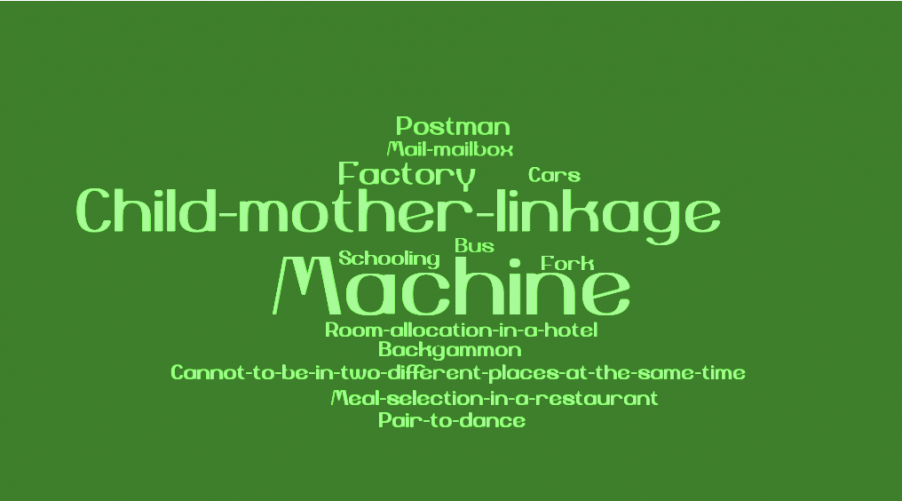
Here’s what I found in my research. As shown in the diagram below, the teachers’ repertoire was rich in analogy, and among them, a ‘child-mother-linkage’ analogy was quite popular.

Figure 1. Analogies made by the teachers for describing the concept of function

Why does this matter?

Mathematics is important as a core skill for life and as a school subject, for attending STEM or non-STEM tertiary studies, and is a core skill for life. This makes mathematics learning and success imperative for both individuals and the general society.  

As mathematical facts, ideas, concepts, or procedures are interconnected, mathematics needs to be taught in a connected way. Students who have such classroom experiences learn likely more mathematics than students who are introduced to mathematical content as discrete rules and formulas. More importantly, students who learn mathematics in a connected way find more opportunities to develop key mathematical competencies such as how to solve mathematical problems and how to think mathematically.

In reality, mathematics is usually taught as a series of unrelated facts, ideas, formulas, or procedures (OECD, 2016). Most students therefore view their mathematics lessons where generally routine and non-contextual questions are practised (e.g., solve the equation 2x + 1 = 13 for x) (Hatisaru, 2020a). Teacher capability is one of the several key factors contributing to views and learning outcomes of students (https://theconversation.com/optimising-the-future-with-mathematics-22122).

How is a mathematical connection defined?

Broadly defined, a mathematical connection is a relationship between two or more mathematical ideas, and it can be two types: extra-mathematical connections and intra-mathematical connections.

Whilst extra-mathematical connections refer to relationships between mathematical and non-mathematical contexts (e.g., musical rhythms and mathematical patterns), intra-mathematical connections are formed between ideas, concepts, procedures, or representations within mathematics (e.g., the graphical and algebraic forms of y = 2x + 1 represent the same relation). 

Generally, there is an emphasis for mathematical connections in national curricula in many countries including the USA, Singapore, Australia, and England. 

As a result of making mathematical connections students develop key competencies. They may use the connections across mathematical topics and see mathematics as an integrated whole and apply mathematical skills to solve problems that arise in other disciplines or in everyday life (see Hatisaru, 2022b).

An analogy can be a powerful cognitive tool for not only connecting mathematical content within mathematics but also connecting mathematical content to other disciplines or real life.

What is an analogy?

In their instruction, teachers sometimes use phrases such as ‘it is like’, ‘similarly’, or ‘just as’ to explain a new concept to a range of students who may have no prior knowledge or compare/contrast a familiar content with a less familiar or abstract content. In these cases, teachers in fact make analogies. Broadly speaking, an analogy is connecting an abstract or complex idea, concept, or situation with a more familiar or concrete idea to make that abstract idea more understandable. 

When learning an unfamiliar or abstract mathematical content – such as the concept of function, students do not necessarily have the background knowledge to grasp that content. In the teaching and learning processes, analogies are used to make those unfamiliar concepts familiar. 

By way of examples, sometimes balancing scales are used when teaching equations. The concept of function is frequently portrayed as a machine, and many teachers use function machines when introducing the idea of function to their students. 

The concept of function: ‘it is everywhere in real life’

Many situations in the real world represent a function. These include the modelling and graphs we have frequently seen on news in the last couple of years showing the COVID patterns.

In school curricula worldwide, a function is defined as a special kind of mathematical relation that has two features: arbitrariness and uniqueness. According to the arbitrariness feature, a function does not need to be defined only on number sets, neither does it need to demonstrate regularity (a particular graph or expression) 

As noted, sometimes functions are described as ‘machines’ or ‘input-output relations’. For example, if x =1 (an input), y = 2 (its output) for the function y = 2x. If x = 1, y cannot be both 1 and 2. That is, for every input there is only one output, and this is exactly the uniqueness condition of functions. 

Research shows that these features of functions can be quite abstract and difficult to understand for school students. In Clement’s (2001) study, for instance, only four out of 35 high school students were able to give a definition of function incorporating these features.

I was curious about what analogies teachers would use to describe the concept of function.

Teachers’ analogies to the concept of function 

Among the total of 224 responses to my open-ended questionnaire, there were 61 instances (representing 26 teachers) where the teachers made an analogy between a function and real-life situation.

The most popular analogies were the conventional ‘machine’ (18 occurrences) and ‘factory’ (4 occurrences) analogies, followed by a novel ‘child-mother linkage’ analogy (12 occurrences). 

One of the teachers, for example, wrote:

[A function is like] Mother-child relation (every child surely has a (birth) mother).

According to another teacher:

If Set A is the set of children, Set B is the set of mothers: (i) no element will be left out in Set A as every child has a (birth) mother; (ii) a child cannot have more than one (birth) mother and also not all mothers have children.

In this ‘child-mum-linkage’ analogy, by comparing a function with the biological linkage between a child and mum, the teachers infer that: 

  • The domain and codomain of a function can be anything – such as children and birth mums – and this promotes understanding of the arbitrariness condition of functions. 
  • Every domain member is mapped to codomain members – like every child has a birth mum, and each domain member is mapped to exactly one codomain member – just like a child cannot have two birth mums. These two similarities between a function and child-mum linkage promote understanding of the uniqueness requirement of functions.

Also, some concepts related to function, and some specific types of functions, can be illustrated through this analogy:

  • Some codomain members may remain unmapped – just as some mums may have adopted – but not biological – children (the concept of upper bound for the range).
  • All domain members can be mapped to a single codomain member – similar to all children in the domain may share the same mum (a constant function). 
  • Each range member is mapped to no more than one domain member – just like no child in the domain shares the same mum (one-to-one function).
  • No codomain member is unmapped – like every mum in the codomain is a birth mum (onto function).

Final words 

My study shows that analogies can be useful cognitive tools for making abstract and complex ideas accessible for students including the formal definition of function. Supporting students in learning the formal definition of function, that contains the uniqueness and arbitrariness features, may support their understanding of the covariation idea, and that can be a focus for future research.

Vesife Hatisaru is a Lecturer in Secondary Mathematics Education in the School of Education at Edith Cowan University and an Adjunct Senior Researcher in the School of Education at University of Tasmania. Her research interests include associations between teacher knowledge and student learning outcomes and teaching and learning practices in maths classrooms.

One day to go: the great education reckoning as parties eye the election prize

The ‘education election’?

Before heading to the polling booths this Saturday, we take stock of how the major political parties, and the newly formed Public Education Party, stack up over their policies and priorities for education. 

It has been a difficult time for public education over the last decade. Research has documented that the teaching profession is in crisis. Stress, high work demands, long working hours, excessive administrative burdens and under-valuing of teachers is contributing to a worsening teacher shortage. School leaders are experiencing poor wellbeing, compounded by reports of threats of violence. 

A decade-long legislated ‘cap’ on teacher salaries has led to wage suppression and difficulties in attracting and retaining teachers in the profession. Meanwhile teachers worked very hard during the COVID-19 pandemic to continue students’ learning, despite reports of experiencing declines in morale and efficacy. Demands on teachers are set to continue with a new curriculum being rolled out next year. And all this in a context where politicians decry ‘falling education standards’ of students, while inequity in the state’s education system continues to grow. 

What is promised for education 

NSW Liberals and National Party Coalition

A key plank of the Coalition’s policy on education is the announcement of a $15.9 billion ‘early years commitment’ that will fund universal pre-kindergarten education, increase affordable childcare places, and improve attraction and retention in the early childhood workforce. This is part of the government’s proposed ‘future fund’ for children to assist with education and home deposits.

The Coalition will also continue an intensive learning support program introduced during the pandemic, providing a $253 million funding boost for this scheme. School infrastructure is also a priority, with a $8.6 billion plan to build and upgrade schools and preschools. 

The Coalition’s Rewarding Excellence in teaching policy promises a $100 million commitment to pay ‘excellent’ teachers salaries of up to $152,000. Permanency in the teaching workforce is also a focus, with a promise to offer 11,000 teachers and 4,000 support staff with permanent roles in 2023. Finally, teachers’ administrative and workload burdens will be targeted through the hiring of 200 new administrative roles, under an initiative introduced earlier this year.

NSW Labor

Labor’s teacher workforce policy aims to “end the war on teachers and attract and keep them”. Noting key recommendations in the independent Gallop Inquiry report, dubbed the ‘blueprint’ for change, Labor’s policy recognises the excessive workloads and administrative burdens on teachers, as well as a need to make teacher salaries more competitive and address the teacher shortage problem (relatedly, there is a promise to scrap the public sector wage cap, but whether this will mean a pay rise for teachers across-the-board is unclear). 

Labor has also articulated a plan to carry out an audit of teachers’ administrative tasks in an effort to reduce teachers’ workload and cut 5 hours worth of administrative tasks per week for teachers. Greater job security is also on the cards, with a promise to convert 10,000 temporary teachers to permanent positions. 

To address historic underfunding and under-resourcing of public schools and ensure the schooling resource standard benchmark for education spending is met (a key recommendation of the Gonski reforms), Labor is promising a $400 million education ‘future fund’. This will be spent on hiring more teachers and school counsellors, as well as making permanent a tutoring program to provide intensive support for students who need it most in an effort to bolster support for literacy and numeracy. 

Other key policies include banning the use of mobile phones in high schools to reduce distractions, allowing public schools to offer the International Baccalaureate program, investment to fund the building and expansion of preschools, as well as building new schools in Western and South-Western Sydney. 

The Greens

The Greens plan to scrap the public sector wages cap and deliver a 15% pay increase to public school teachers (plus inflation) as well as increase release time from face-to-face teaching, drawing on the Gallop Report recommendations. 

Some other policies include increasing the number of school councillors in public schools, developing a workforce plan to better attract teachers into the profession over the next decade, and funding schools to 100% of the schooling resource standard. 

The Public Education Party 

It says something about the state of public schooling in NSW that a group of seventeen teachers and principals are standing for the newly formed Public Education Party. These candidates commit to “advocating for quality public education, supporting all students, championing all public educational institutions and communities, advocating for social justice and equity, and fighting for a fairer, more cohesive, and productive society”. 

The Public Education Party’s policies include fully funding the schooling resource standard for all schools, and commitment to the national, but much neglected goal, of developing “active and informed citizens”.

The scale of the challenges 

We commend many of these proposals as promising developments to deal with teachers’ workload and administrative demands, and high rates of temporary teachers in the profession. Indeed, workload and job insecurity are issues we have researched and reported on for many years. 

But promises to shave off a few hours of teachers’ administrative workload per week, we argue, are not sufficient and also open up risk of essential work of teachers being ‘carved off’ to achieve this numeric target. 

And, adding to workload pressures, no new funding is being injected into schools to support teachers in planning for the new curriculum – at present, funding to plan for the new curriculum will come from schools’ existing budgets, including already underfunded public schools. 

Pay increases in the form of ‘rewarding excellent teachers’ also don’t address the across-the-board decline in teacher salaries – an issue the independent Gallop Inquiry recommended required urgent redress. Such policies are also based on economic arguments that assume teachers are motivated by financial rewards, a position that is not well-supported in research.  

Overall, from our perspective there is a need to truly understand and appreciate the complex nature of teachers’ work, and to support this work through appropriate work and employment conditions. This goal will remain important, no matter the election outcome. 

Mihajla Gavin is a lecturer in the Business School at the University of Technology Sydney, and has worked as a senior officer in the public sector in Australia across various workplace relations advisory, policy and project roles. Mihajla’s research is concerned with analysing the response of teacher unions to neoliberal education reform that has affected teachers’ conditions of work. Mihajla is on Twitter @Mihajla_Gavin. Meghan Stacey is a former high school English and drama teacher and current lecturer in the School of Education at UNSW Sydney. Meghan’s primary research interests sit at the intersection of sociological theory, policy sociology and the experiences of those subject to systems of education. Meghan’s PhD was conferred in April 2018. Meghan is on Twitter @meghanrstacey Susan McGrath-Champ is Professor in the Work and Organisational Studies Discipline at the University of Sydney Business School, Australia. Her research includes the geographical aspects of the world of work, employment relations and international human resource management. Recent studies include those of school teachers’ work and working conditions. Rachel Wilson is Professor, Social Impact, University of Technology Sydney Business School . She has expertise in educational assessment, research methods and programme evaluation, with broad interests across educational evidence, policy and practice. She is interested in system-level reform and has been involved in designing, implementing and researching many university and school education reforms. Rachel is on Twitter @RachelWilson100.

Header image from the NSW Teachers Federation website

Could this one thing make students love school again?

School refusal has been labelled a “national trend” by the Senate education committee. Primary and secondary children are not attending school and it is not because of cold symptoms or COVID. The problem of school refusal is international. The Dutch program “Knowing What Works” identifies interventions that work in helping young people who struggle with attending school. The report claims that education is essential to young people’s development and that the interaction between the service providers, such as psychologists, the student’s parent and teachers contributed positively to the student’s capacity to return to school. In Australia, school refusal is not a new phenomenon, but it has gained considerable attention following the impact of the 2020 and 2021 COVID-19 shutdown periods on our school students. The Productivity Commission reported that the national primary school attendance rate was 87.8 per cent in 2022, a 4.5 per cent drop from 2021. Furthermore, the Australian Professional Teacher’s Association submission stated that “a lot more time today is spent on student wellbeing issues than even five years ago” (p143).

There is no doubt that primary school-aged children’s socialisation has been hampered by the COVID lockdown periods of 2020 and 2021. The impact of isolation on the mental health and wellbeing of students is a prime concern. During the COVID lockdowns in Australia in 2020 and 2021 many families were forced to stay home and somehow work out how to learn online. For families in lockdown routine was difficult and surviving day to day became the priority. Students struggled with the “lack of face-to-face connection with teachers … felt incredibly disconnected and isolated from peers” (p7). The impact on parents’ own mental health and coping capacity cannot be underestimated. For many children the world became “frightening” with children displaying symptoms of fear, worry and sadness.

Worldwide people turned to some form of creativity as a way to cope and to connect. View from my window attracted 3.8 million members on facebook. Time reported that TikTok became the “uncontested social media platform” for all ages with dance challenges. Teachers innovated, developing “various ideas to engage students whilst teaching them and attempting to make learning fun for them which would help assist their want to learn.”(p13).

Primary arts teachers devised some amazing learning activities that unified and inspired their students and their families. Household items became art-making materials, everyday clothes became costumes and any space in the house or garden became a self-tape studio for children to make videos to share with their peers. But for teachers monitoring student engagement online was prohibitive. They could not see immediate feedback through students’ body language and facial expressions, “you did not know if the students were actually there, listening and working” (Ziebell & Roberston, 2021, p17). Teachers as well as students missed the social interaction of learning at school.

State and Territory education authorities provided supporting materials, such as Queensland Department of Education’s fact sheets to help parents support their children returning to school, highlighting the importance of routine and planning for the day ahead. The Federal government launched the world’s first National Children’s Mental Health and Wellbeing Strategy in October 2021. In their 2021 study, Ziebell and Robertson found that respondents in primary schools were a little more positive about the level of support for students than their secondary school respondents. In primary schools, greater emphasis was placed on student wellbeing than on maintain academic standards. But now in 2023 school refusal and student mental health and well-being is of continued concern.

Returning to school for both students and teachers has meant readjustment to face-to-face learning and to functioning within the whole school environment. Queensland independent school primary teachers in Ziebell and Roberston’s study have focussed on “rebuilding rapport with their students”(p20) but the return to school in NSW teachers were concerned that the disruption to transition points in schooling such as commencing school, completing Year 6, starting secondary school, will have ongoing negative effects on students (Fray et al., 2022). Additionally, in the first year of returning to school, limitations on extra-curricular activities such as performance and public speaking, as well as inter-year mingling for peer-support stifled students’ socialisation within the school. These were activities students looked forward to. NSW teachers noted behaviour issues such as anxiety, frustration, aggression and some reported evidence of self-harm. Teachers attributed poor social interaction among students on their return to school to the lack of face-to-face contact they had with peers during lockdown (Fray et al., 2022, p.9).

The impact of lockdowns on students’ academic achievement has received much attention, but  teachers experience the day to day behaviours which are a result of lack of social contact: increases in challenging behaviour, tired and fatigued students, and students’ lower capacity to engage in learning upon return to the classroom (Fray et al, 2022, p10).

The Emerging Priorities Program funds projects that assist school communities to respond to emerging priorities in school education, including to meet the ongoing challenges of COVID-19. An examination of primary student, teacher and parent experiences of arts learning online during COVID-19 lockdown, is examining primary arts learning online. By listening to primary students, teachers’ and parents’ recollections of arts learning online, the study will identify evidence of the Personal and Social capability and develop examples of practice intended to support teachers and students returning to school.The national survey is open now for teachers, students and parents who were connected with primary schools in 2020 and 2021.

Dr Linda Lorenza is a qualitative researcher and arts practitioner whose interests are in the performing arts, arts education, and applied arts in health and rehabilitation contexts. She is Head of Course for the Bachelor of Theatre and teaches theatre, acting and drama. Lorenza is a chief investigator, with Don Carter, on the Emerging Priorities Program research into arts online learning.

Dr Don Carter is a senior lecturer in the UTS School of International Studies and Education, he specialises in working with teachers to investigate innovative writing pedagogies to improve student performance and outcomes across the curriculum. Carter is a chief investigator, with Linda Lorenza, on the Emerging Priorities Program research into arts online learning.

Politicians screaming HALT: Why teachers now need so much more than this

The Highly Accomplished or Lead Teacher (HALT) program has been called a “badge searching for a role” but amid the political machinations in NSW, it’s taking on new angles –  as a timely pre-election promise and a reusable political football. 

Sarah Mitchell, NSW Education minister, has a goal: the appointment of a further 2,500 HALTs by 2025. There are already 310 HALTs in NSW. After a decade of HALT certification, NSW has added an average of just 31 teachers a year. Mitchell is “thrilled that we are on track to meet this target, with almost 600 new teachers signing up since we streamlined the process last year.” Some quick maths makes it clear that there is still something of a gap of 1,590 teachers, with only two years left to reach the goal. 

This rate of gain of HALT numbers within New South Wales would provide something that the accreditation has not seen before. Especially considering that nationally, there have been an average of 100 teachers per year, across all jurisdictions, being certified as HALTs. To add 800 teachers in each of the next two years in NSW alone would change the dynamic of certification – and change the landscape of teaching in New South Wales and possibly Australia. Cynics may ask “where has the commitment been for the past decade in NSW?” Moving from 30 teachers being certified each year to a goal of 2500 seems to be a surprising change in pace – without a lot of explanation of the thought process underpinning such a move. 

The new appetite in New South Wales is a contrast to a patchwork of progress towards certification around Australia over the past decade. 

Indeed, not all Australian teachers are able to become certified, as much as they might like to, as the program has not been adopted in every jurisdiction and system.

Notably it’s not currently available to Victorian Government teachers. Tasmanian teachers can wait for the outcome of a pilot scheme started in 2021. In Western Australia, seven teachers were certified as HALT in 2012, and the state’s public sector has not certified another teacher since. 

It’s not like alternatives to HALT don’t exist – Western Australia has the support of the Department and the union to operate the Level Three system which certifies 100 teachers every year. Some independent systems run their own accreditation system beyond HALT – using the Australian Professional Teacher Standards (APSTs) as a basis for an independent system of teacher certification. As noted within the National Teacher Workforce plan, Victoria’s ‘Teaching Excellence Program’ and New South Wales ‘Best in Class Program’ are also similar models which could reasonably be rebadged as HALT, or counted towards the count. However, the Victorian model only admits 100 teachers per year, so it seems unlikely to contribute significantly towards the lofty goal of one HALT in every school

So while the opportunity in New South Wales is an important one to establish a bold direction for HALT status, it stands precariously this week. It’s a Liberal Party promise delivered in the shadow of an election (NSW voters go to the polls on March 25). Shadow education spokesperson Prue Car was asked for input for this article about the Labor Party’s position regarding HALTs in NSW. While she was unable to reply before publication, her public pronouncements about the Liberals’ plans leave little room for doubt – calling it an election stunt that was “too little too late”. If there is a change of government in New South Wales it would appear the opportunity for this mode would be lost (in NSW, for the next four years, at least).

Leadership gaps, become a HALT, then what? 

As noted within a recent discussion, the HALT process sits rather oddly within the middle leadership space within Australia which, similar to HALT, is inconsistent across jurisdictions and lacks clarity. Genuine opportunities for experienced teachers to develop themselves tend to be tied to academic pathways, in-school leadership positions, or roles within education Departments. Systems such as Finland and Singapore have leadership and development pathways more like lattices than ladders, where experienced teachers can explore consultancy, policy development and instructional coaching roles. Whereas Australia, and NSW specifically, has a tendency to provide a ladder of opportunities with many rungs missing. 

In this respect, the HALT process itself may be viewed as an innovative process ahead of its time. The progression from teacher to HALT may be a learning experience, or it may not, with the potential for further pay, and then…. uncertainty.. 

It’s hard to conceive of a development process that leaves you where you started, in this case ‘in the classroom’. With that in mind, the program begins to look more like an ill-conceived teacher retention strategy that assumes that teachers’ primary levers of influence are fiscal. We know from research however that teachers are less influenced by monetary incentives to select between teaching jobs, and a small bump in salary compared to more lucrative non-teaching roles elsewhere seems unlikely to retain teachers. It can be tempting to assume that all policy directives that work on a neoliberal, market-based ideology are flawed, but this need not be the case. 

One approach among many? 

With a recent study suggesting there is no appreciable difference between early career teachers and experienced teachers in teaching quality, it’s interesting to consider what this could mean for HALT. Indeed the paper itself suggests that expert teachers are typically selected based on non-classroom factors such as teaching awards and recommendations, with the HALT process being similar to a teaching award application process. 

Most would agree that teacher pay needs attention, as just one strategy among others. As the Federal Education Minister Jason Clare works at a broader National Teacher Workforce plan proposes a raft of actions to address the looming and worsening teacher shortage. The current document, open for review and submissions, notes “Streamline Highly Accomplished and Lead Teachers (HALT) processes to make it less burdensome for teachers, set a target to increase the numbers of HALTs, and incorporate recognition of equivalent qualification and certification processes”. So while it remains under review, it seems likely that HALT, and similar processes, have a home within the Australian education policy patchwork, the outcome of the NSW election will be pivotal to just how well supported it is within New South Wales, the unofficial home of HALT within Australia. 

Steven Kolber is a career teacher and researcher, exploring ways to empower teachers within their careers. He runs workshops at Victoria University. His recent book with Dr Keith Heggart: Empowering Teachers and Democratising Schooling: Perspectives from Australia considers many possibilities for ways to develop and improve teacher status. 

John Cole is a middle school teacher in Canberra and was certified as Highly Accomplished in 2013 and 2019. He is studying for a Doctor of Education at The University of Melbourne, examining schemes to advance Australian teaching careers.

Can your canteen make money? Depends where you live

Parent and Citizen Associations are traditionally linked to school fundraising  through cake stalls, fetes and trivia nights. Now their emphasis has shifted to commercial ventures run at scale. That’s led to new tensions, roles, and relationships. Here’s what we found.

The issue of school funding in Australia remains controversial. The Review of Funding for Schooling, known as the Gonski report, found that school funding mechanisms are complex, lack coherence, transparency, and contribute to inequitable student outcomes. The report recommended a sector-blind, needs-based model of school funding to improve student outcomes. The report also suggested that philanthropic giving could be one avenue for improved funding for schools in disadvantaged contexts. This advocacy for philanthropy is often forgotten when discussing the Gonski report, but we think it is timely to consider the role of philanthropy in Australian school funding. 

In the US, philanthropy tends to be dominated by venture capital consortia and billionaires. However, in Australia the common type of philanthropy is more grassroots and centres on the roles of parent groups such as Parent and Citizen Associations (P&Cs). 

P&Cs are school-based organisations that work in partnership with schools and the community to enhance outcomes for students. The fundraising now include running profitable school-based businesses including canteens, uniform shops and Outside Hours School Care services that generate large-scale funding that can be reinvested in essential education services that is not captured in official funding data. 

Re-prioritising P&Cs as philanthropic organisations

This reconfiguration to commercial ventures in Queensland emerges from both the systemic restructuring of Australian education privileging school autonomy, between-school competition, and performative metrics and the struggle to fund core educational services in public schools. The mobilisation, and reconfiguration of philanthropy is a pillar of systemic marketisation, yet it rarely receives as much scrutiny as autonomy, performativity and competition.

Research into philanthropy has tended to focus on either the ideological work of billionaires and venture capital consortia and their ability to influence systemic public school policy and practice (see Scott, 2009) or the strategic alliances between P&Cs and philanthropic donors (see Yoon et al., 2020). This research into philanthropy has tended to focus on North America, and fails to speak to concerns emerging in Australia. 

Tax law regulations in Australia prevent philanthropists from donating directly to state education departments or to public schools, meaning there is less evidence of philanthropic influence over public schooling policy and practice. However, in Queensland alone in the 2021/22 financial year, P&Cs generated more than $83 million in contributions to public schools. Put simply, venture philanthropy appears less significant in Australian schools than in contexts such as the U.S. 

From community building to commercial fundraising

In our paper, we argue that there are new tensions, roles, and relationships emerging in Queensland state school P&Cs as they strive to overcome limited government resourcing. The logics of marketisation have shifted responsibility for discretionary school funding to parent consumers, setting up an equity challenge as not every school has the same community resources, socioeconomic advantages, or economies of scale to leverage this philanthropic behaviour.

We draw three significant conclusions from this research.

First is the differentiated capacity of P&Cs to engage in profitable school services leading to a two-tiered public school system. One P&C representative, from an advantaged metropolitan school, spoke of how low student enrollments had forced them to close their canteen as it was continuing to make significant losses year on year. This evidences a relationship between student enrolment and profitability. Indeed, it is difficult to mount a case that schools with smaller enrolments, in rural and remote locations, or those that service communities with complex needs will generate the same benefits as large, metropolitan schools in leafy green suburbs. 

Second is that makingpublic school communities responsible for funding that governments should provide is not a good idea. We argue that when parents and P&Cs accept responsibility for fundraising to meet the gap in government funding shortfalls, they stop asking or agitating the government to provide adequate resourcing for their school. 

Third is that this shift from community building to resource extraction produces a different set of community relations. While some P&Cs reported that the community and commercial forms of fundraising co-exist, the emphasis continues to shift towards profitable commercial ventures. The argument made by the P&C representatives interviewed is that the financial needs of many public schools is greater than support for excursions or replacing a class set of textbooks. Larger infrastructure projects such as equipping schools with air conditioning or building science labs necessitate more commercially minded fundraising.  

Moreover, P&C representatives reported that many parents no longer had the time or energy to engage in community building. The traditional approach of appealing to parent volunteers to run fetes, cake stalls and trivia nights was falling flat even as the need for fundraising became more urgent. The view of those participants involved with P&Cs was that engaging in commercial fundraising both lightened the load on parents and generated funding at a scale to enable larger projects. Participants reported that, given the scale of what schools needed, bake sales were never going to be enough.

What we have found through this exploratory study is that philanthropy is different in Australia than what we might expect given the international literature. P&Cs can add hundreds of thousands of dollars to a public school’s budget, yet it is unlikely that these same schools are accessing philanthropy from venture capital or billionaires. 

Understanding the work that P&Cs are doing, and their justifications for that work, is important because of what it tells us about public school funding and the challenges that schools are facing.

Anna Hogan is senior research fellow in the School of Teacher Education and Leadership at the Queensland University of Technology. Her research focuses on education privatisation and commercialisation. She currently works on a number of research projects, including investigating philanthropy in Australian public schooling, the privatisation of global school provision, and the intensification of teachers’ work.

Greg Thompson is a professor in the Faculty of Creative Industries, Education & Social Justice at the Queensland University of Technology. His research focuses on the philosophy of education and educational theory. He is also interested in education policy, and the philosophy/sociology of education assessment and measurement with a focus on large-scale testing and learning analytics/big data.

Pausing NAPLAN did not destroy society – but new changes might not fix the future

NAPLAN is again in the news. Last week, it was the Ministers tinkering with NAPLAN reporting and timing. This week it is media league tables ranking schools and sectors, according to NAPLAN results, coinciding with the upload of latest school-level data to the ‘My School’ website. We are now about one month out from the new March test window so expect to hear a lot more in the coming weeks. Many schools will be already deeply into NAPLAN test preparation. 

NAPLAN and My School website were initially introduced by PM Julia Gillard as levers for parental choice. Last week’s ACARA media release reiterates that their primary purpose is so parents can make ‘informed choices’ about their children’s schooling. Media analysis of NAPLAN results correctly identifies what researchers know only too well: that affluence skews educational outcomes to further advantage the already advantaged. 

The Sydney Morning Herald notes that “Public schools with and without opportunity classes, high-fee private institutions and Catholic schools in affluent areas have dominated the top 100 schools…” The reporters are careful to draw attention to a couple of atypical public schools, achieving better results than might be expected from their demographics. A closer look at the SMH table of Top Performing primary schools shows that most low ICSEA public schools ‘punching above their weight’ are very small regional schools. 

No doubt there is a lot to learn from highly effective and usually overlooked small rural schools, but few families can move to them from the city. Parental choice is constrained by income, residential address, work opportunities and a myriad of other factors. In any case, as Stewart Riddle reminds us, what makes a ‘good school’ is far more subtle and complex than anything that a NAPLAN can tell us. 

NAPLAN has gradually morphed into a diagnostic tool for individual students, though there are other tools more fit for this purpose. Notably, the pandemic-induced NAPLAN pause did not lead to the collapse of Australian education but was seen by many teachers as a relief when they were dealing with so many more important aspects of young people’s learning and well-being. 

Education Ministers’ adjustments to NAPLAN indicate that they are at last responding to some of the more trenchant critiques of NAPLAN. The creation of a teacher panel by ACARA as part of the process of setting standards hints that the professional expertise and voices of teachers are valued. Bringing NAPLAN testing forward will hopefully make it more useful where it really matters – in schools and classrooms.

The move to four levels of reporting will be more accessible to parents. Pleasingly, the new descriptor for the lowest quartile – ‘Needs additional support’ – puts the onus on the school and school systems to respond to student needs.

Yet one of the keenest critiques of NAPLAN has not been addressed. There have been widespread calls from educators and academics for the NAPLAN writing test to be withdrawn. It has been found to have a narrowing effect on both the teaching of writing and students’ capacity to write. There is also a whole “how to do NAPLAN” industry of tutors and books pushing formulaic approaches to writing and playing on families’ anxieties.

The failure of the current round of changes to address the NAPLAN writing test leaves students writing like robots. Meanwhile, the release of ChatGPT means that students doing NAPLAN writing for no real purpose or audience of their own are wasting their time. Robots can do it better! These changes needed to map writing better to the National Curriculum, and endorse more meaningful, creative, multimodal and life-relevant writing practices.

 As a single point in time test, NAPLAN has always been just one source of data that teachers and schools can draw upon to design targeted interventions to support student learning. Nevertheless, earlier results will mean that schools will have robust evidence about their need for additional resources. Professional expertise in literacy, numeracy and inclusive education support must be prioritised. 

Parents might be able to resist the inclination to shuffle their children from school to school as a reaction to media headlines, school rankings, and promotional campaigns from the independent sector. Alliances might form between parents and schools to support greater action by state and federal Ministers to address the deeply entrenched divisions that have become baked into Australian schooling.

Attention to NAPLAN continues to mask serious ongoing questions about why Australian governments have created conditions where educational inequities, segregation and stratification are now defining characteristics of our education system. Numerous reports and inquiries have identified flaws and perverse effects from NAPLAN as high stakes testing, especially in relation to the writing test. There is a lot of work yet to be done if NAPLAN is to really be useful and relevant for Australian schools, teachers, parents and learners.

Professor Susanne Gannon is an expert in educational research across a range of domains and methodologies. Much of her research focuses on equity issues in educational policy and practices. Recent research projects include investigations of the impact of NAPLAN on the teaching of writing in secondary school English, young people’s experiences of school closures due to COVID-19 in 2020, and vocational education for students from refugee backgrounds in NSW schools.

Dr Lucinda McKnight is an Australian Research Council Fellow in Deakin University’s Research for Education Impact (REDI) centre. She is undertaking a three year national project examining how the conceptualisation of writing is changing in digital contexts. Follow her Teaching Digital Writing project blog or her twitter account @lucindamcknight8

Header image courtesy of Rory Boon.