



In 2016, Judyth Sachs reflected on her 2003 monograph ‘The Activist Teaching Profession’ and asked, ‘Teacher professionalism: Why are we still talking about it?‘. In that paper, she argued ‘the time for an industrial approach to the teaching profession has passed’ and made a case for ‘systems, schools and teachers to be more research active with teachers’ practices validated and supported through research’ (p.413). I am not sure what Judyth would say five years later but I think this is the discussion that still needs to be had. We do need to talk about teacher professionalism in Australia in 2021 and particularly the way it is being constructed and reconstructed through teacher education policy.
In 2020, Martin Mills and I compared teacher professionalism as it was constructed in teacher education policies in Australia and England, and concluded,
… derision and mistrust of teacher education is evident in both contexts. The construction of teacher professionalism through the policies in Australia and England reflects a managerial approach dominated by performance cultures, increased accountability, and teacher standards … the extent to which teachers research and improve their practices, and invoke professional judgement involving interrogation of available research … rarely feature .
Mayer & Mills, 2020, p.14
The 2014 Teacher Education Ministerial Advisory Group (TEMAG) review and the resulting updated accreditation standards and procedures have constructed teacher and teacher educator professionalism in Australia. Two key drivers are evident: making sure the ‘right’ people come into the profession and making sure beginning teachers are ‘classroom ready’. Teacher education was clearly positioned as a problem that could be fixed by tighter accountability mechanisms related to these drivers.
While the TEMAG review claimed to consider ‘wide-ranging evidence and research’ in recommending that the Australian Government act ‘on the sense of urgency to immediately commence implementing actions to lift the quality of initial teacher education’ (Recommendation 2), previous government reports, governments commissioned research consultancies, and/or reports from multinational entities like the OECD and McKinsey & Company, were used to support a perceived need for change. Peer reviewed and published research by teacher education academics rarely featured. In this way, evidence to support the claims and recommendations was constructed in a particular way, supporting Helgetun and Menter’s (2020) claim that evidence is often a rationalized myth in teacher education policy because policies are regularly politically constructed and ideologically based.
An important component of the TEMAG argument and recommendations, as captured in the report’s title, was that graduates from teacher education programs must be ‘classroom ready’. As a result, teacher education accreditation requirements changed to include a final-year teaching performance assessment. This caused much upheaval, requiring significant changes to the teacher education curricula and to teacher education resourcing in order that programs remained accredited. However, little attention was given to what should be assessed; that is, what beginning teachers should know and be able to do. More attention was given to how teacher educators must design and implement the performance assessment, and various accountability mechanisms for surveillance of this process. The assumption seemed to be that the already developed Australian Professional Standards for Teachers accurately detailed the required professional knowledge, practice, and engagement, and that what was needed was a tighter accountability framework for teacher educators and their practices. Of course, regular critiques of such standards highlight how they construct a particular type of professionalism by focussing on what teachers do rather than what and how they think. None of this was not interrogated in the TEMAG review.
In addition, great emphasis was given to ensuring that the ‘right’ people come into the profession. This focus on the person (i.e., on teachers, not their teaching) resulted in recommendations about required academic skills and desirable personal attributes and characteristics for entry to teacher education programs. In the end, measures of academic skills ended up being the Australian Tertiary Admission Rank (ATAR) and levels of personal literacy and numeracy. Of course, many teacher education entrants are not secondary school graduates. Thus, the political and media hype about ATAR and the quality of the teaching profession is misguided. In relation to personal levels of literacy and numeracy, TEMAG recommended that teacher educators ‘demonstrate that all preservice teachers are within the top 30 per cent of the population in personal literacy and numeracy.’ Not surprisingly, this 30% category proved rather challenging to associate with a score on the Literacy and Numeracy Test for Initial Teacher Education Students.
Another aspect aimed at ensuring that the ‘right’ people were admitted to teacher education was the recommendation for selection processes to assess the ‘personal characteristics to become a successful teacher’ (Recommendation 10).
At its worst, this conjures up visions of the 1930s so-called teacher characteristics ‘research’ associated with what makes a good teacher (which inevitably included being female and liking children).
Ensuring the ‘right’ people come into teaching was translated into accreditation requirements for providers to use non-academic selection criteria and, in practice, this has meant everything from a short personal statement attached to applications to the use of commercially produced tests designed to assess personal characteristics. Moreover, teacher education providers were required to ‘publish all information necessary to ensure transparent and justifiable selection processes for entry into initial teacher education programs’ suggesting a mistrust in providers to make appropriate decisions about selection of entrants to their teacher education programs.
Thus, teacher professionalism in Australia is being constructed as being the right type of person with appropriate personal characteristics and levels of personal literacy and numeracy, who can demonstrate successful teaching practice against standards within a system that determines performance indicators and mechanisms for classroom readiness. Moreover, teacher educator professionalism can be interpreted as ensuring the production of graduates who are classroom ready at point of graduation via programs that are accredited using nationally consistent standards.
In Australia and in England, the relentless reviewing of teacher education continues in 2021. And, yet again, the wording does not disguise the goals of these reviews. In Australia, the ‘Quality Initial Teacher Education Review’ will consider how to attract and select high-quality candidates into the teaching profession and how to prepare ITE students to be effective teachers Nothing new to see here. In the UK, the Initial Teacher Training (ITT) Market Review is focussing on ‘how the ITT sector can provide consistently high-quality training, in line with the core content framework, in a more efficient and effective market’
Do we need to keep talking about teacher and teacher educator professionalism? Definitely!
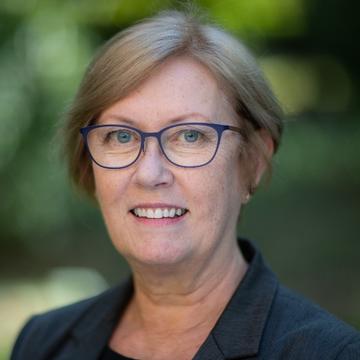
Diane Mayer is a professor of education (Teacher Education) at the University of Oxford and an honorary professor at both the University of Queensland and the University of Sydney.



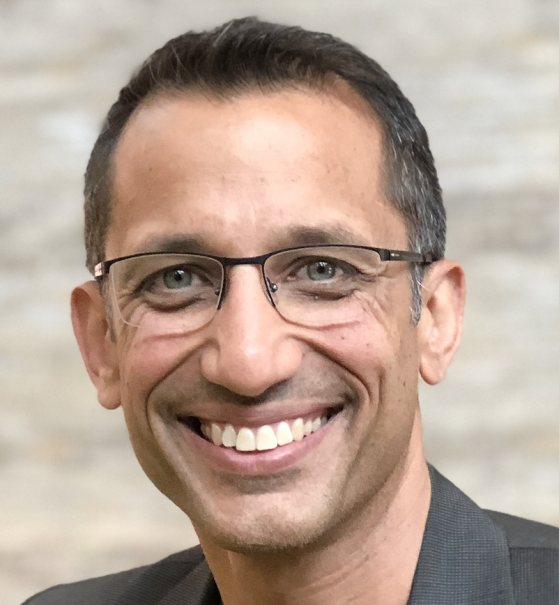
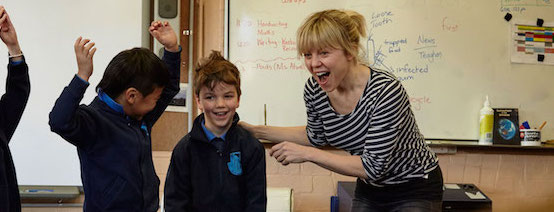
 John Nicholas Saunders is a former secondary school teacher and the current Education Manager at Sydney Theatre Company. He holds a Bachelor of Creative Industries (Drama), Bachelor of Education (Secondary), Masters of Research and is currently studying for a PhD. John’s classroom work together with his research has focused on Drama as pedagogy and its benefits for student literacy, engagement, motivation and empathy. John has extensive experience in Arts Education and has held positions as a senior curriculum writer, head of department; Board member of Playlab Press, President of Drama NSW and Drama QLD. He currently holds positions as: President, Drama Australia; Honorary Associate, The University of Sydney; Chair, Australian Major Performing Arts Group (AMPAG) Education Network; and Drama representative, National Advocates for Arts Education. In 2014 he was awarded the Council for the Humanities, Arts and Social Science (CHASS) prize for future leader in the field and in 2016 he published ‘The School Drama Book: Drama, Literature & Literacy In The Creative Classroom’ with is colleague, Professor Robyn Ewing.
  Susan Davis is Deputy Dean Research for the School of Education & the Arts at CQ University, Australia. Her research has focused on drama, arts-education, engagement and digital technologies. She is one of the Co-Convenors of the Arts Education Research SIG of AARE and a Board member for Drama Australia and the Sunshine Coast Creative Alliance. Sue was previously a drama teacher and performing arts Head of Department and has created and managed many arts-based projects in collaboration with various education, arts industry and community groups. Susan was one of the convenors of a Creative Education Summit held at ACMI in 2016, with summit outcomes contributing to an Arts Education, Practice and Research group submission to the “The House of Representatives Standing Committee on Employment, Education and Training Inquiry into innovation and creativity: workforce for the new economy”. She was also invited to present further evidence at a roundtable for the inquiry.

 Robyn Ewing is Professor of Teacher Education and the Arts at the University of Sydney. She teaches in the areas of curriculum, English and drama, language and early literacy development. She works with both undergraduate and postgraduate pre-service and inservice teachers. Robyn’s research has particularly focused on the use of educational or process drama with authentic literary texts to develop students’ imaginations and critical literacies. She has been published widely in this area. Her current research interests also include teacher education, especially the experiences of early-career teachers and the role of mentoring; sustaining curriculum innovation; and evaluation, inquiry and case-based learning.

 Dr David Zyngier works in the Faculty of Education at Monash University as a Senior Lecturer in the areas of Curriculum and Pedagogy. He was previously a teacher and school principal. His research focuses on teacher pedagogies that engage all students but in particular how can these improve outcomes for students from communities of disadvantage focusing on issues of social justice and social inclusion. He works within a critical and post-structural orientation to pedagogy that is distinguishable by its commitment to social justice (with interests in who benefits and who does not by particular social arrangements) and its dialectic critical method investigating how school education can improve student outcomes for all but in particular for at risk students.
