



20 years into a new century how do we understand educational expertise?
In Finland teachers are trusted professionals, who have a large degree of autonomy over pedagogy and assessment, are able to carry out research, and play a critical role in the design of curricula (Pollari, Salo & Koski, 2018). This does not appear to be the case in many other jurisdictions, including Australia. Indeed, increasingly “teachers and principals are cast as technicians who have the technical skills to implement the ideas of others but not the professional expertise to engage in the exciting task of theorizing and designing curriculum” (Reid, 2019, p. 44-45).
This has led to a growing call for teachers to become ‘research-engaged’ (Godfrey, 2016) and for teachers’ practice to be more research-informed (Kolber & Heggart, 2021). However, the Australian Professional Standards for Teachers (AITSL, 2011) do not expect teachers to ‘access and critique relevant research’ unless they wish to be recognised as ‘highly accomplished’ and do not expect them to engage in research until they become ‘lead teachers’. In contrast, the OECD (2021) argue that teachers need to be experts in learning, and this means that they need to be involved in research, because “the current knowledge base is not in the library; it is in the invisible college of informal associations among research[ers]’ (Locke et al., 2009, p. 48). Indeed, to be a mature profession you need to own (i.e. create) the knowledge base – you have to be research literate (Sachs, 2016, cited in Mills et al., 2021), which “means being both a discerning consumer and a discerning producer of research” (Mills et al., 2021, p. 81).
Beyond individual teachers, the turn to more research-informed practice is reflected in the proliferation of government-backed education research institutes devoted to influencing policy and practice, among them the Education Endowment Foundation in the UK, the What Works Clearinghouse/ Institute of Education Sciences in the US, and the Australian Institute for Teaching and School Leadership. These initiatives attempt to address the ‘theory-practice gap’ which the OECD (2021, Executive Summary) identified as a “major barrier to the use of scientific knowledge and research evidence” in education. However, these research clearing houses tend to adopt a ‘What works’ approach that de-professionalises teachers (Gore 2020, cited in Mills et al., 2021) by presenting them with guidance on ‘evidence informed practice’ that can marginalise context and individual teacher’s expertise. The Gonski 2.0 Report (Department of Education and Training, 2018) recommended creating a national evidence and research institute, which led to the formation of the Australian Research Education Organisation (AERO) in 2021, which aims to build more explicitly upon teachers’ expertise.
Similarly, a positive approach is evident in the Q Project at Monash University, which with $6.3million of funding from the Ramsay Foundation, is exploring teachers’ use of evidence. This at least positions teachers as engaging directly with research, rather than having it mediated by centralized research clearing houses. However, this still positions teachers as consumers of research, rather than as researchers. In today’s knowledge economy being seen as having expertise requires that you are contributing to the professional knowledge base, not just drawing upon it (Twining & Henry, 2014).
A quiet revolution
In the last decade, a growing number of schools have moved to embed ‘research-informed practice’ as a key part of their professional learning and improvement agendas. While research has long been happening in schools this has often been on the periphery, or something done ‘to’ schools rather than ‘by’ schools. Breaking this pattern, in the last few years more than 30 Australian schools have either established a ‘research centre’ or ‘institute’ of some description, or appointed a ‘research lead’, often reworking an existing senior leadership role to explicitly focus on research. They are raising the expectation for schools as not just passive consumers of expert knowledge produced elsewhere, but genuine contributors to the knowledge economy.
What we’re calling ‘Research Invested Schools’ embrace research and innovation as key to their identity and enterprise. They have clear research and innovation priorities, engage staff in inquiry programs from practitioner research through to PhDs, and are both conducting their own studies and translating research conducted elsewhere. Many Research Invested Schools emphasise practitioner research, where teachers design and implement small projects inquiring into their practice. For example, Pymble Ladies’ College supports research through its own ethics committee, which has membership across the school and academic community. Staff and student research is published through their ‘Illuminate’ and ‘Perspectives’ journals. Similarly, the Barker Institute at Barker College publishes a journal of staff academic writing, hosts public events, and conducts its own research. For example, it is conducting a longitudinal study following the journey of a cohort of students through 10 years at Barker.
Whilst Research Invested Schools can and do carry out research independently, they may also form partnerships with local universities or school networks, (such as the Association of Independent Schools of NSW’s School-Based Research Projects program). Some schools have acted as industry partners for major Australian Research Council linkage grants, such as studies of Indigenous education between The Scots College and the Australian Catholic University, and next-generation learning spaces between Brisbane’s Anglican Church Grammar School and the Learning Environments Applied Research Network at the University of Melbourne. Research Invested Schools are also very focused on research translation, especially parent and community education, sharing their learning through conferences, lectures, publications, podcasts, webinars and more. The Crowther Centre at Brighton Grammar School in Melbourne produces a podcast featuring leading thinkers on boys and boys’ education, which has over 60,000 followers.
By contributing to the development and utilisation of educational research, Research Invested Schools are helping to re-professionalise teaching and reinvigorate teachers as experts.
A group of schools hosted by The Scots College, Sydney, recently hosted a gathering of over 20 leaders of Research Invested Schools around the country. These schools are eager to connect for joint projects and shared professional learning, and to advocate for schools as learning organisations and teachers as trusted experts leading a grass-roots renewal of the teaching profession.
This article was developed in collaboration with Hugh Chilton (The Scots College), Caitlin Munday (The Scots College), Allyson Holbrook (University of Newcastle), and Carl Leonard (University of Newcastle).

Peter is Professor of Education (Innovation in Schooling & Educational Technology) at the University of Newcastle (Australia), having formerly been Professor of Education (Futures) at the Open University (UK). He has also been a primary school teacher, initial teacher educator, the Head of Department of Education at the Open University, the Co-Director of the Centre for Research in Education and Educational Technology, and Co-Editor in Chief of Computers & Education. He has brought in over £10million of external funding, most of which was focussed on issues to do with the purposes of education, the management of educational change, and enhancing education systems, informed by understandings of learning, pedagogy and the potentials of digital technology. He blogs at https://halfbaked.education, is @PeterT on Twitter and his LinkedIn profile is at https://www.linkedin.com/in/peter-twining/.

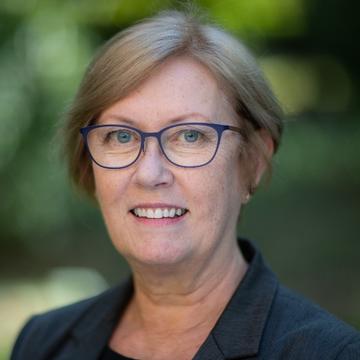

 Professor Linda Graham works in the School of Early Childhood and Inclusive Education at Queensland University of Technology (QUT). Linda coordinates Inclusive Education Theory, Policy and Practice, a core unit in the Faculty of Education’s Master of Inclusive Education and leads QUT’s Student Engagement, Learning & Behaviour Research Group (@SELB_QUT), and is a member of the Board for All Means All – Australian Alliance for Inclusive Education. She has published more than 80 books, chapters and journal articles, and is leading two current large scale projects investigating educational responses to students with learning and behavioural difficulties. Linda blogs at drlindagraham.wordpress.com.au and can often be found on Twitter: @drlindagraham
 Dr Kate de Bruin works in the Faculty of Education at Monash University Her current research investigates evidence-informed practice and policy in inclusive education, with a focus developing teacher capacity for using inclusive pedagogies in ways that improve equity and quality schooling for all students, and she regularly provides professional learning to school teachers in these areas. She has worked with government departments on projects such as the Victorian Inclusion Support Programme, and the Nationally Consistent Collection of Data for Students with Disabilities.
 Dr Ilektra Spandagou is a senior lecturer at the Sydney School of Education and Social Work, University of Sydney. She worked as a special teacher in mainstream settings before she completed her PhD at the University of Sheffield, UK, in inclusive education. She has worked in inclusive education in three countries: as a researcher at the University of Sheffield, UK, and as a lecturer at the University of Athens and the University of Thessaly, Greece, before moving to The University of Sydney. Her research interests include inclusion, disability, comparative education and classroom diversity. Her current research projects focus on inclusive policy and practice within a rights perspective. A common thread of this work is a conceptual understanding of inclusive education as a transformation project requiring a paradigmatic shift in perceptions of both ability and education. Her publications include the book ‘Inclusive Education: International Policy & Practice’ (co-authored with A.C. Armstrong and D. Armstrong) published by Sage in 2010.